
48-Hour Marathon Nets 186,000 SOL, Decrypting the Crypto Culture Experiment Triggered by PAIN


Original Article Title: "'Living Meme' PAIN: A Crypto Cultural Experiment from Pain to Prosperity"
Original Article Author: Alex Liu, Foresight News
Presale Timeline: 48-Hour Fundraising Nets $38 Million, 80% Refund Sparks Market Controversy
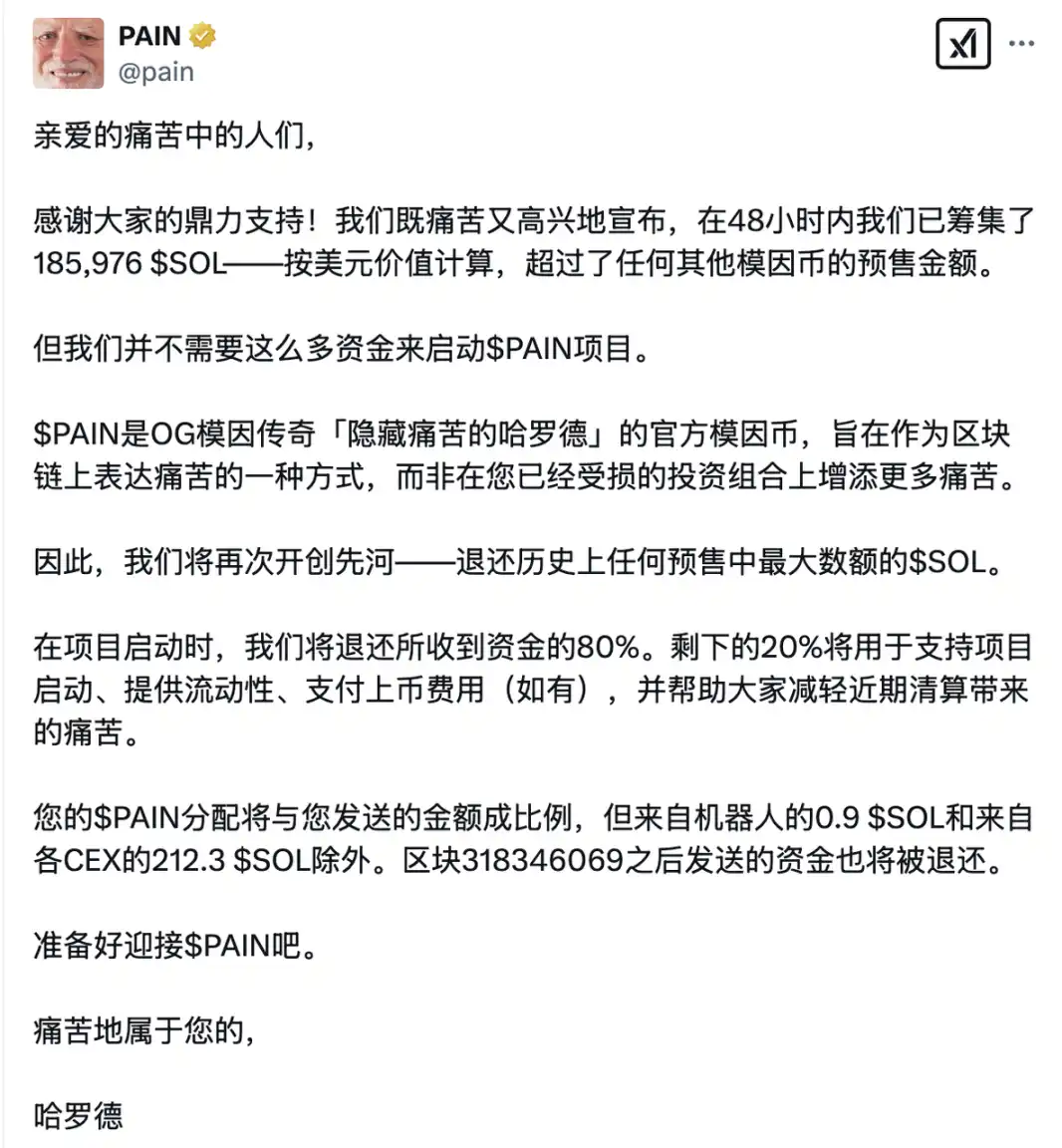
On February 2, 2025, a highly anticipated Meme coin presale within the crypto community commenced. The PAIN project, incubated by Memeland, raised a staggering 186,000 SOL tokens (approximately $38 million) within 48 hours, making it one of the largest Meme coin presales in history. However, the project team later announced a disruptive decision: to refund 80% of the funds raised, retaining only 20% for launch and liquidity. This move not only sparked discussions about the project's "integrity" but also quickly turned PAIN into a focal point of attention.
Origin: From "Smiling through Pain" to Crypto Symbol
The inspiration behind PAIN stems from the classic internet meme "Hide the Pain Harold," whose prototype is Hungarian photographer András Arató. In the early 2000s, his "smiling through pain" expression showcased in a photography equipment advertisement became an internet cultural symbol due to its strong contrast. For over a decade, Harold's image has been widely used to express life's frustrations and forced smiles, with Arató himself adopting the identity with a humorous attitude, becoming the "living meme."

Memeland's Hype: Celebrity Endorsements and Community Schism
As a project incubated by Memeland, PAIN's eruption was closely tied to the mother platform's resource allocation. By the end of October 2024, after the establishment of PAIN's official Twitter account, Memeland quickly laid the groundwork:
Celebrity Effect:
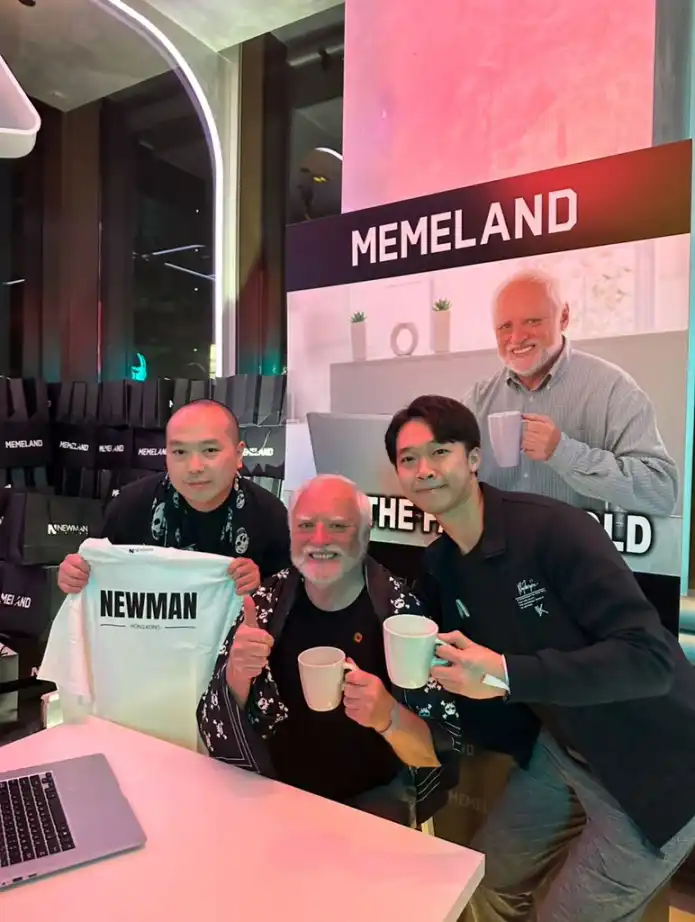
During the Binance Blockchain Week in the same October, a photo of Harold's prototype Arató with Binance founder CZ went viral. Memeland's token MEME had long been listed on Binance, and the occurrence of the photo was no doubt fueled by Memeland's efforts behind the scenes.

Community Collaboration:
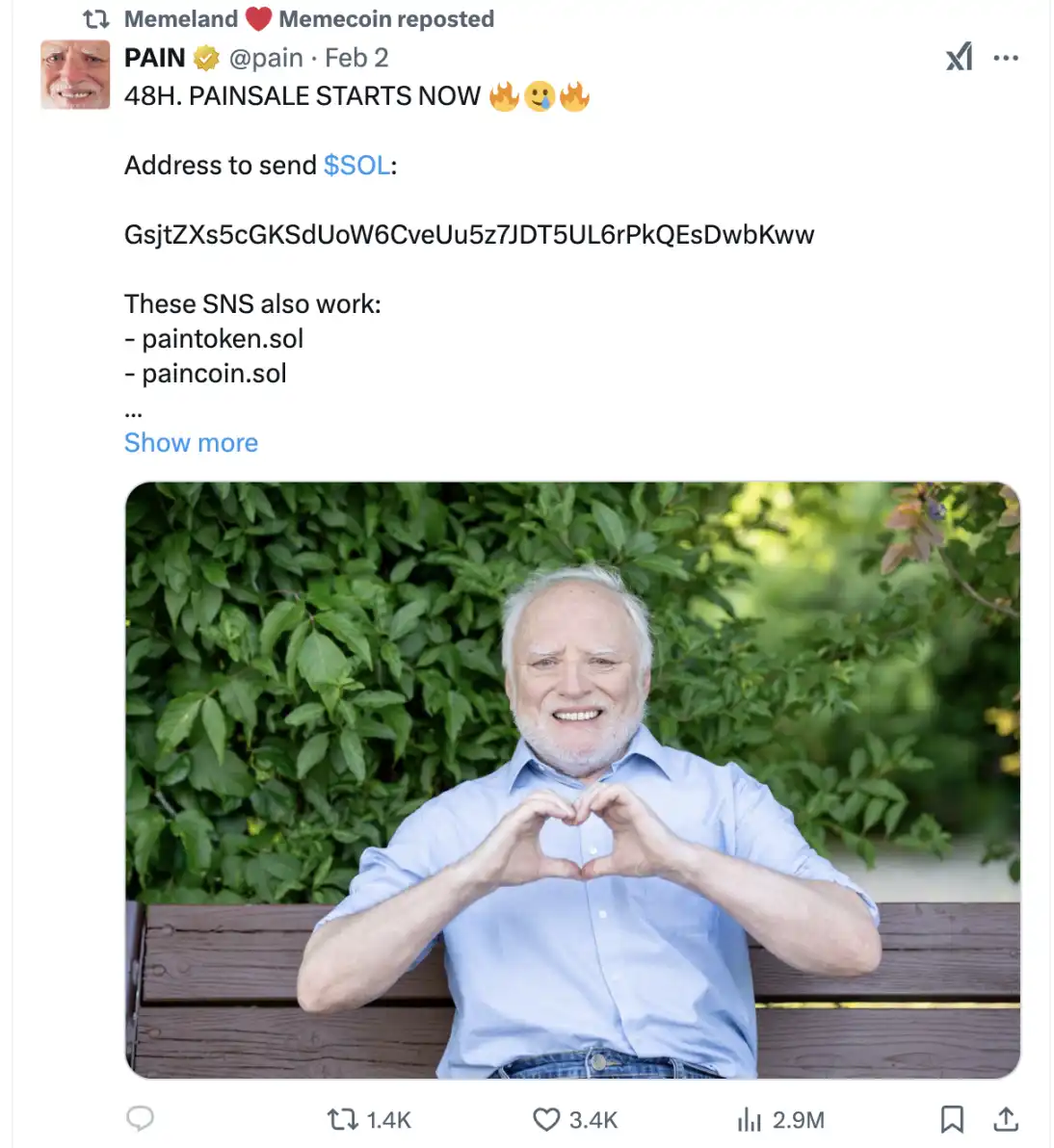
The Memeland official account has repeatedly retweeted PAIN updates, including the presale announcement, generating a resonance of traffic. (The presale is currently over, please do not send funds to the address in the image)
Memeland founder and Harold prototype Arató attended an offline blockchain event together.
Refund Event: Genuine Marketing or Risk Shifting?
After the presale, the project team announced a refund of 80% of the funds, retaining only 20% (approximately $7.6 million) for launch, providing liquidity, and paying CEX listing fees (if any). The official explanation stated that this was done to "reduce the burden on investors and demonstrate long-term commitment," but controversy ensued: Supporters believe that the refund reflects an "anti-rug pull" attitude, contrasting with most Meme projects that "raise funds and run"; while skeptics point out that the refunded SOL has depreciated due to market volatility, and the 20% retained funds still far exceed the launch needs of similar projects.
From a rational analysis perspective, the 80% refund amount is the highest among similar projects, and this portion of the funds can be seen as potential buying pressure after the token is listed, which indeed can be considered as protecting the returns of existing investors.
Regardless of the motive, this event objectively created a secondary spread for PAIN, achieving a significant victory in terms of traffic.
Future Challenge: The "Meme Coin" Paradox
The short-term success of PAIN relies on Memeland's community momentum and the innate virality of Meme culture (of course, not without the hype of Meme traders), but long-term development faces challenges: If Harold's "pain" core is overly commercialized, it may erode its original charm; and Meme coins rely on market hype, making them particularly vulnerable in a bear market.
The specific launch time of the PAIN token is not yet clear. Let us first observe its performance in the market before making judgments.
Conclusion
From Harold's wry smile to the successful presale of the PAIN token, this experiment has affirmed the absurdity and creativity of the crypto world. When "pain" becomes a tradable consensus, perhaps the true meme has already transcended the screen, embedded in the collective emotion of this era.
You may also like

Full text and analysis of the speech by the CEO of SanDisk at the 42nd Annual Strategic Decision Conference of Bernstein

Bitcoin Price Prediction 2030: Ark Invest Forecasts $710K

WEEX Review 2026: Fees, Security and Trading Features

SOL Price Today: Live Solana Price, Charts & Market Data

What Is a Bitcoin ETF: Spot vs Futures Explained

Why Is Bitcoin Dropping 15% While Nasdaq Hits Record Highs?
Morning Report | Coinbase Ventures makes its first investment in ENA; SpaceX plans to set the IPO price at $135 per share

Morning Report | Robinhood completes acquisition of WonderFi for $180 million; Anthropic submits IPO draft application to SEC confidentially; Google plans to raise $80 billion in financing

WSJ: Hyperliquid is becoming Wall Street's crypto "convenience store"

Why do I still have confidence in ETH?

CRCL surges and plummets, COIN follows with a dive: The real battle for interests behind the CLARITY Act

Tokenized US stocks are not the "liquidity killer" of the crypto market

What Is TradFi and Why Is Everyone Talking About It in 2026?

From Poland to Paris: A Look Back at WEEX's Global Community Journey in May 2026

WEEX WXT Eco Carnival: How to Join WXT Events and Plan Trading Tasks
The WEEX WXT Eco Carnival is an ecosystem campaign built around WEEX Token (WXT), designed for users interested in platform tokens, spot trading, futures trading, deposit tasks, and referral rewards.

Morning Report | Strategy sold 32 BTC and over 800,000 shares of MSTR last week; Binance officially announced its U.S. stock trading portal; Polymarket reached an exclusive partnership with OneFootball
Zhou Hang: How much is SpaceX really worth?

IOSG: From Coinbase to Upbit: How a Token Completes a 28-Day Journey of Taking Over
Full text and analysis of the speech by the CEO of SanDisk at the 42nd Annual Strategic Decision Conference of Bernstein
Bitcoin Price Prediction 2030: Ark Invest Forecasts $710K
WEEX Review 2026: Fees, Security and Trading Features
SOL Price Today: Live Solana Price, Charts & Market Data
What Is a Bitcoin ETF: Spot vs Futures Explained
Why Is Bitcoin Dropping 15% While Nasdaq Hits Record Highs?


