
Bull Market Returns, Can Ethereum's Pectra Upgrade Turn the Tide?


Original Article Title: Ethereum's Path Forward
Original Article Author: @YashasEdu
Original Article Translation: zhouzhou, BlockBeats
Editor's Note: Ethereum is facing fierce competition from new public chains like Solana, with the price not hitting a new all-time high and activity decreasing. The Pectra upgrade and the RISC-V proposal aim to improve scalability, reduce costs, and maintain security and compatibility. Meanwhile, Solana is rapidly rising with its high efficiency and low cost, challenging Ethereum's position.
The following is the original content (slightly reorganized for better readability):
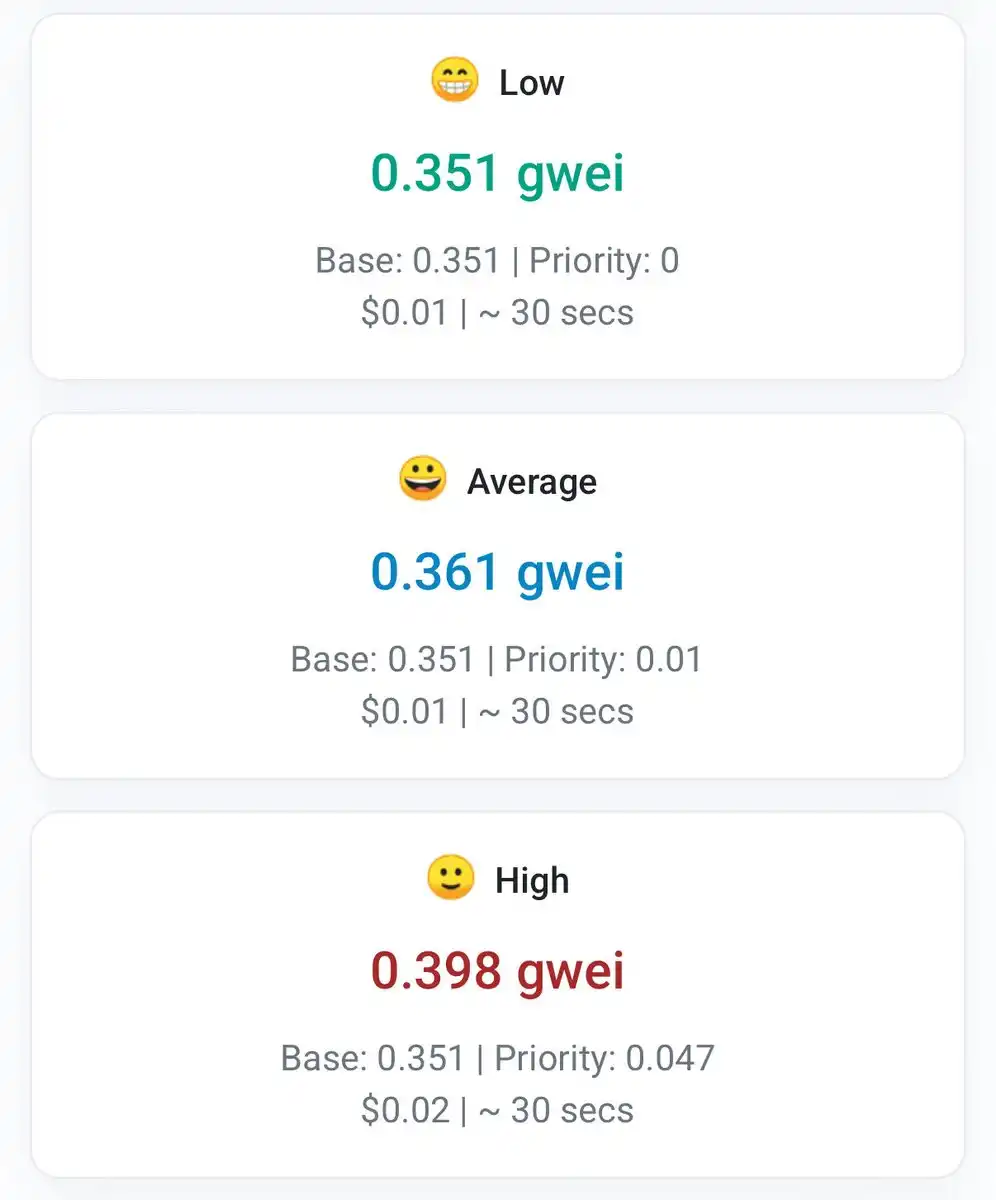
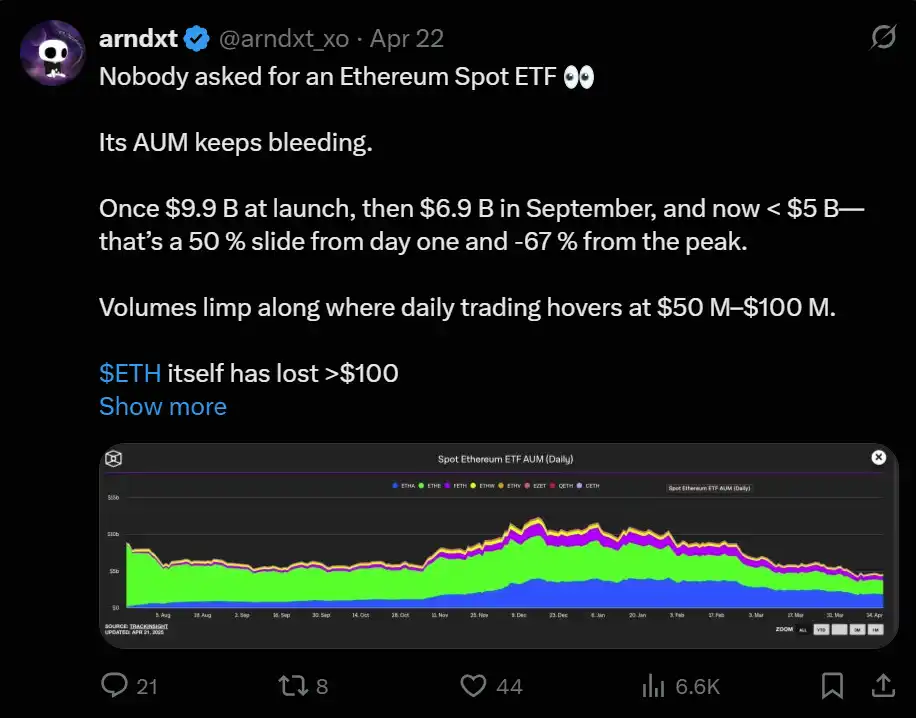
Ethereum has not seen a new all-time high in price in 2025, with the ETH/BTC exchange rate hitting a five-year low (0.02), and narratives of L2 and re-staking competition have not effectively boosted its value. At the same time, transaction fees have also dropped to the lowest level since 2020, with an average of only $0.36 per transaction.
With a surge in @solana users (daily active users reaching 3.25 million, while Ethereum is only at 410,000), daily transaction volume is far ahead (35.99 million transactions vs Ethereum's 1.13 million transactions), making many people curious: where will this world's second-largest chain go from here?
Two major upgrades that could reshape Ethereum's future
1. Upcoming Pectra Upgrade
2. Vitalik's proposal to use RISC-V technology to replace the existing EVM
Pectra Upgrade (Expected to launch on May 7, 2025)
The Pectra upgrade combines the two updates that were originally separate (the "Prague" for the execution layer and the "Electra" for the consensus layer) into a comprehensive upgrade, consisting of a total of 11 EIPs, with the goal of improving Ethereum's scalability, efficiency, and security.
Three Core Improvements of Pectra
1. Enhanced Scalability
Introducing PeerDAS and Verkle Trees technology, significantly enhancing transaction processing capability
Optimizing data storage to reduce node operating costs
Hash tree technology speeds up network synchronization
2. Lower Transaction Costs
Reduced network congestion is expected to lead to a substantial decrease in Gas fees
EIP-7702 enables account abstraction, allowing users to pay Gas with stablecoins rather than just ETH
Batch transactions and custom security features improve wallet experience
3. Enhanced Staking Mechanism
EIP-7251 increases the maximum staking amount for each validator from 32 ETH to 2048 ETH, promoting institutional participation and reducing operating costs
EIP-6110 migrates staking processing for validators to the execution layer, reducing validator activation time by approximately 48 hours
RISC-V Proposal (Long-Term Disruption?)
Vitalik recently proposed a more radical idea: replacing the Ethereum Virtual Machine (EVM) with RISC-V technology, which would fundamentally change how Ethereum executes smart contracts.
What is RISC-V?
RISC-V is an open-source Instruction Set Architecture (basically the language that tells a processor how to execute commands).
Unlike Ethereum's exclusive EVM, RISC-V's advantages include:
Fully open-source and free
Widely used in mainstream computing hardware
More suitable for complex computations
More friendly to zero-knowledge proof (zk) technology
Why Replace EVM?
1. Substantial Performance Improvement:
RISC-V is expected to increase execution efficiency by 100 times.
Transaction fees will significantly decrease.
Private transactions and cross-chain functionality will become more feasible.
2. Better Support for ZK Technology:
The current zkEVM system must first convert EVM instructions to RISC-V before generating zero-knowledge proofs, resulting in a computation burden 100 to 1000 times heavier.
Native support for RISC-V will bypass this conversion step.
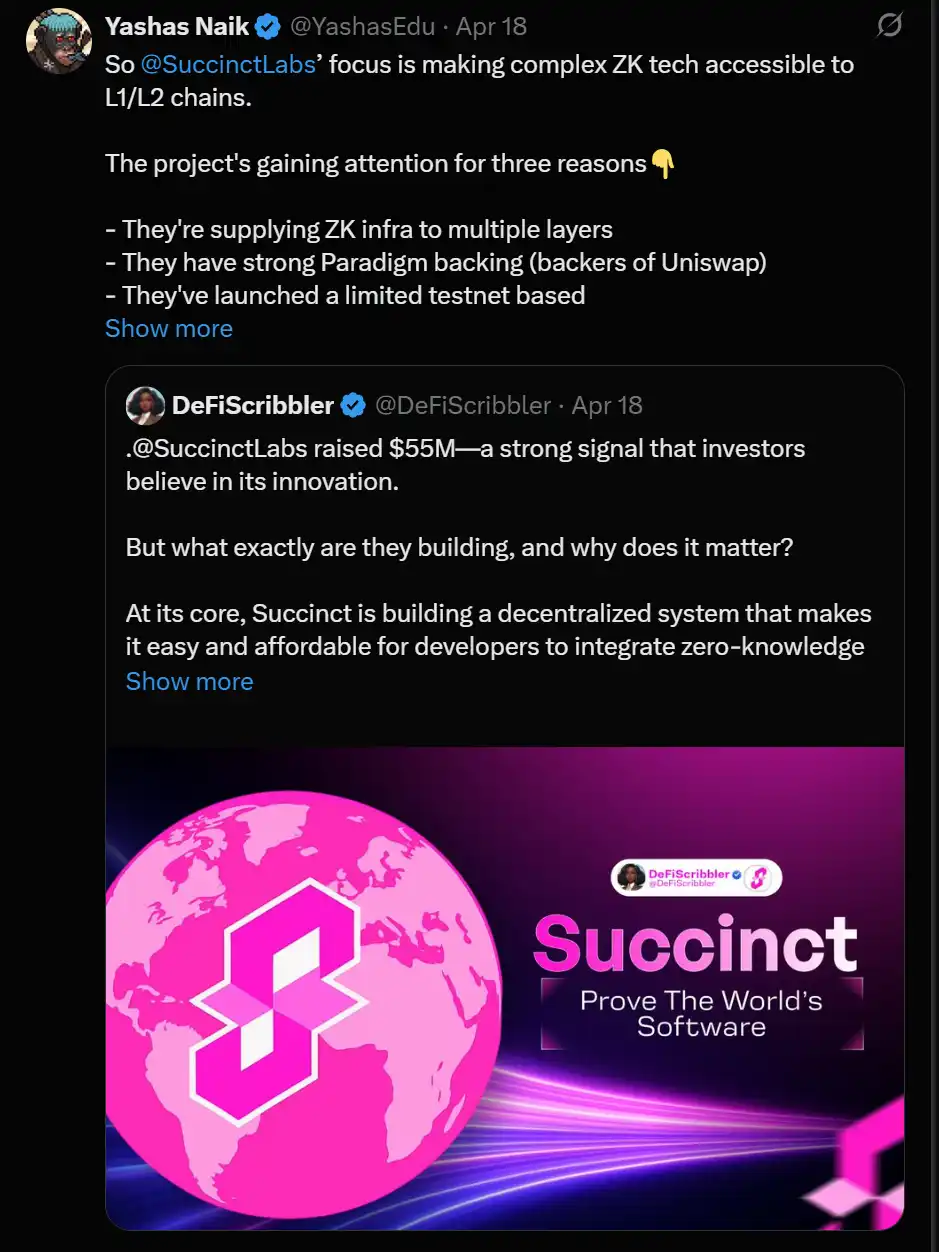
For example, @SuccinctLabs' zkVM (SP1) can directly run smart contracts using RISC-V.
Summary: In the current context where L2 narratives and re-staking fervor have failed to drive ETH performance, the Pectra upgrade and RISC-V plan may be Ethereum's new "breakthrough" key points. The former is a practical update for short-term efficiency improvements and fee reductions, while the latter is a long-term revolution of the underlying structure of smart contracts.
3. Developer Continuity:
Developers can still use Solidity or Vyper to write smart contracts
These languages only need to target RISC-V as a new backend
The user experience will see almost no significant changes
4. Implementation Timeline:
This is not an immediate implementation change. Vitalik's proposal represents a long-term vision, expected to:
Be gradually implemented, taking approximately 2-3 years
Maintain the old system (EVM interpreter) during the transition period
Ultimately make Ethereum competitive with efficient chains like Solana and Monad
What Does This Mean for Ethereum's Future?
Ethereum is facing a survival challenge: while maintaining its leading position as the primary smart contract platform, it must address the performance bottlenecks that some emerging blockchains have successfully overcome.
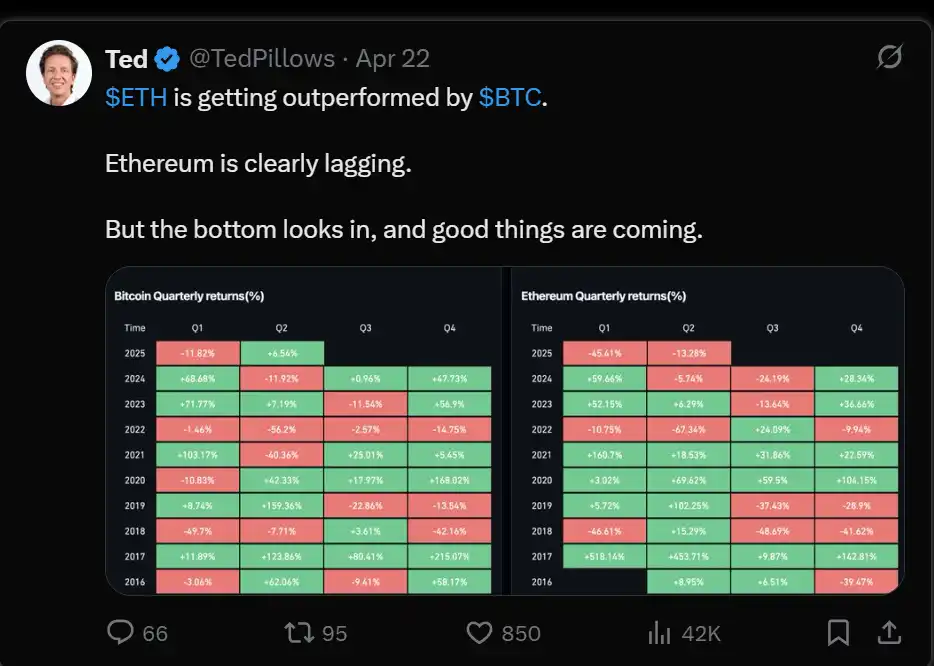
The Pectra upgrade addresses the urgent issues in staking, transaction costs, and user experience, while the RISC-V proposal focuses on Ethereum's fundamental execution architecture, aiming to provide a technical foundation for competing with faster public chains while retaining its security and decentralized advantages.
For users, these changes ultimately mean
Increased transaction processing speed
Lower fees
More possibilities for new applications (such as on-chain AI, privacy features)
Better scalability without sacrificing security
By advancing performance enhancement plans while preserving compatibility with existing applications, Ethereum is attempting to evolve without abandoning its core principles and ecosystem.
However, whether these changes are enough to maintain its market position in the face of faster-growing competitors remains to be seen.
If not Ethereum, then who? The latest data shows that the competitive landscape is undergoing significant changes. While the top ten DeFi protocols still operate on Ethereum, we have also seen warning signals of its diminishing lead.
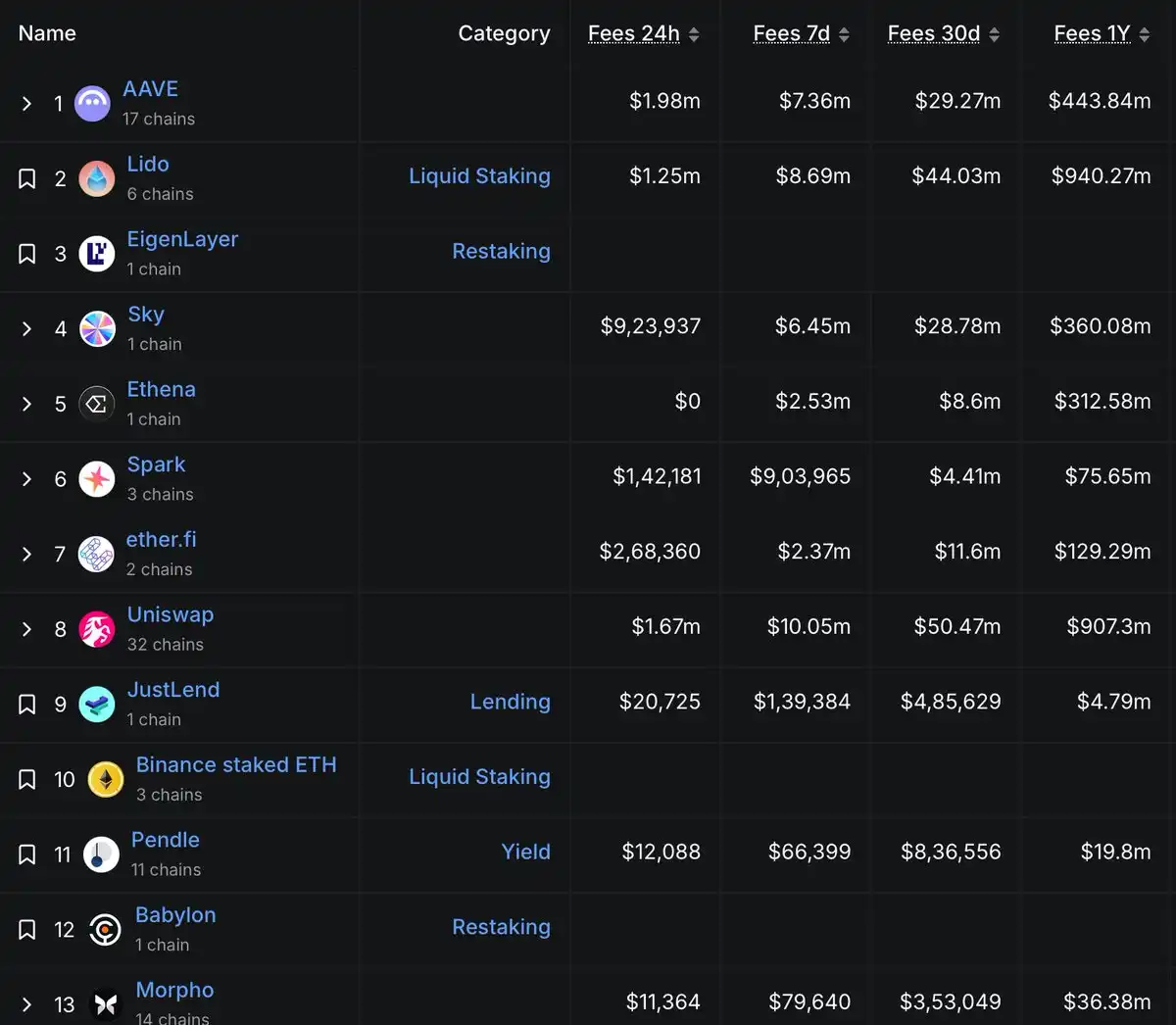
Projects like @jito_sol and @JupiterExchange are rapidly growing on other chains, and @convergeonchain (Ethena's RWA public chain) has completely moved away from the Ethereum ecosystem. These dynamics indicate that Ethereum's leading position is not set in stone, raising a key question.
What future technological breakthroughs does Ethereum need to maintain its competitiveness?
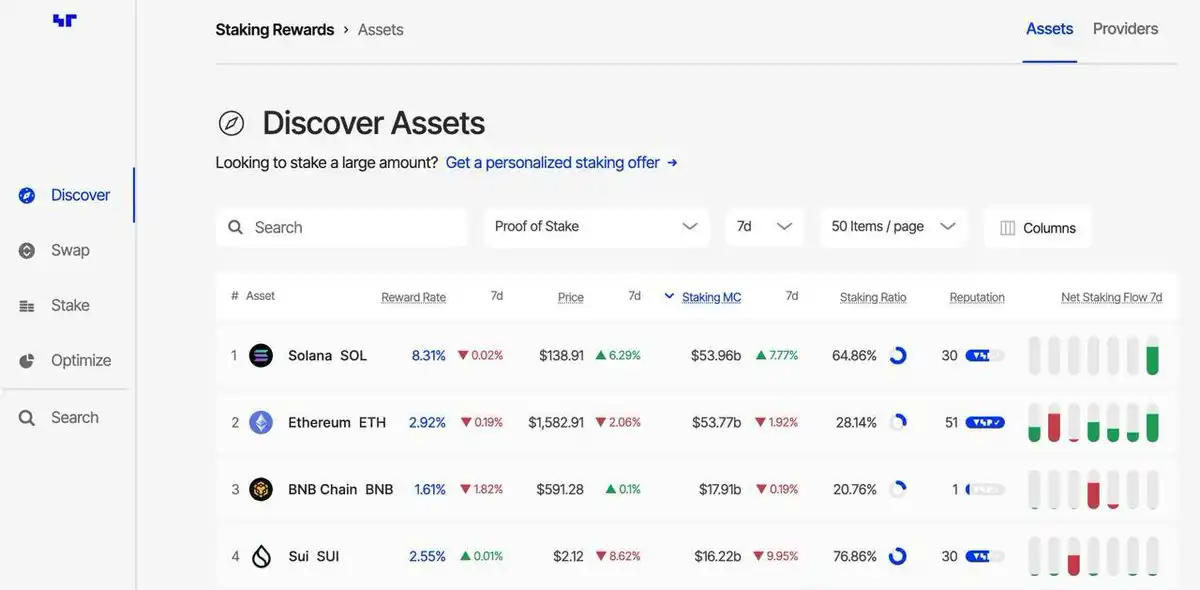
According to @nansen_ai's data, Solana recently surpassed Ethereum in total staked value (a significant milestone for the SOL ecosystem), indicating that institutions' confidence in Solana's staking infrastructure is rapidly growing.
At the same time, Solana outperformed all other blockchains in first-quarter 2025 revenue performance while still maintaining extremely low transaction fees. This combination of "high revenue + low user cost" showcases Solana's efficient economic model.
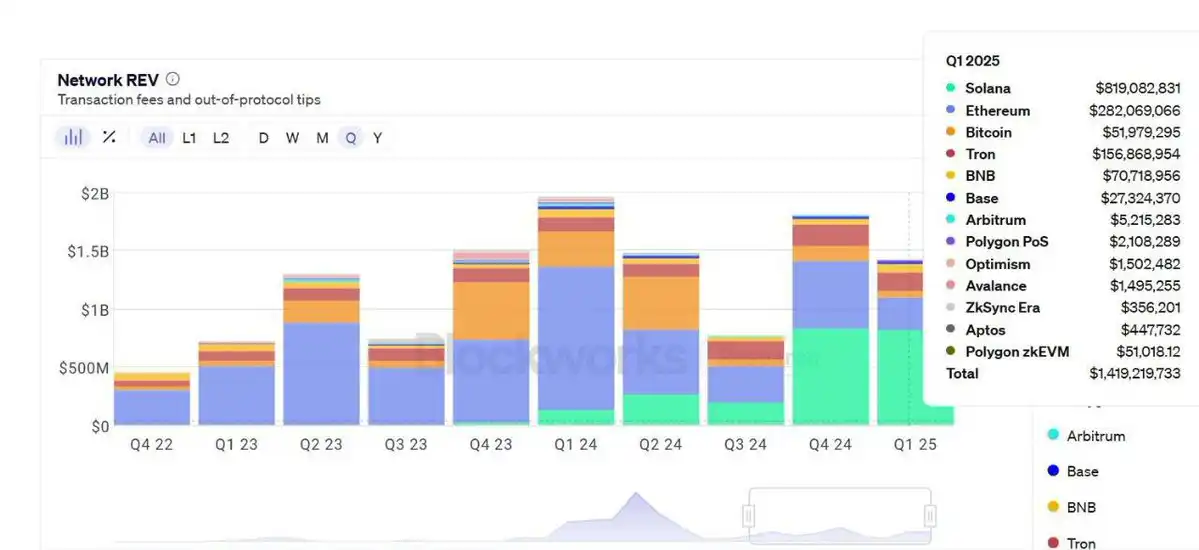
These advancements undoubtedly put greater pressure on Ethereum's technological roadmap. Despite the Pectra upgrade and the potential RISC-V transition aimed at addressing Ethereum's scalability and cost issues, Solana, with its current architecture, continues to attract market attention and share.
Source: Original Article Link
You may also like

Fortune Warns of Strategy’s Financing Structure Risks as Bitcoin Premium Narrows
Fortune warned that Strategy’s Bitcoin treasury model faces growing financing risks as MSTR’s net asset premium narrows and preferred stock dividend pressure increases.

Ferrari Challenge Le Mans: Carl Moon to Dominate in WEEX Livery

Sahara AI Responds to SAHARA’s Sharp Drop: No Contract or Product Security Issues Found, Internal Investigation Underway
Sahara AI responded to SAHARA’s 60% price drop, saying no token contract or product security issues have been found and an internal investigation is underway.

WEEX Deposit/Withdrawal Dynamic Island: Your Asset Status, Always in Sight

Scaling Crypto Derivatives: The Digital Asset Infrastructure Behind High-Volume Trading
In the fast-moving digital asset ecosystem, derivatives platforms face an extreme architectural test. High-leverage futures markets demand more than just standard security—they require absolute operational precision, zero-latency matching engines, and ironclad structural scalability, all while navigating intense market volatility.
As global platforms scale to meet these demands, the industry is shifting away from rigid, monolithic setups toward a more agile, "decoupled" infrastructure philosophy.
The Blueprint for High-Volume Copy TradingFor elite global exchanges like WEEX (founded in 2018), this architectural choice becomes critical when scaling high-volume retail features like social copy trading. When thousands of users automatically mirror the real-time strategies of elite traders simultaneously, it triggers sudden, monumental spikes in concurrent transactional volume.
To prevent execution latency or settlement bottlenecks during these peak volatility events, a platform's primary engine must remain entirely dedicated to risk management, copy-trade synchronization, and order matching.
The Architectural Rule: New-generation platforms must separate front-end user execution engines from heavy backend infrastructural overhead to eliminate operational friction.
By separating these layers, platforms can maintain complete sovereignty over their trading environments and user experiences while strategically aligning with institutional-grade infrastructure ecosystems. This strategic framework allows modern exchanges to leverage advanced Digital Asset Custody infrastructure such as Cobo’s behind the scenes, ensuring that backend wallet management scales elastically alongside trading spikes.
Capitalizing on Market Momentum and 400× LeverageIn a derivatives arena where platforms offer up to 400× leverage on perpetual contracts, capital efficiency and market agility are core business metrics. To capture market momentum, an exchange needs the ability to rapidly expand its asset offerings, supporting everything from legacy crypto assets to sudden, trending altcoins across a massive library of trading pairs.
Adopting a flexible, scalable Wallet-as-a-Service (WaaS) solution such as Cobo’s could completely rewrite the development timeline for high-growth exchanges. Instead of spending months of engineering capital building out custom backend wallet architectures for every new blockchain network, platforms can deploy localized infrastructure in days.
This agility allows platforms to instantly scale their listings to over a thousand trading pairs without compromising security or delaying time-to-market. It mirrors the exact operational advantages seen during high-velocity market events, similar to how advanced wallet infrastructure empowers platforms during sudden asset surges; allowing exchanges to pass that speed and liquidity directly to their global user base.
A Mature Foundation for GrowthThe synergy between trusted infrastructure ecosystems and global trading platforms represents the natural evolution of a maturing crypto market. As WEEX continues to scale its global spot and derivatives offerings for over 6 million users, adopting robust backend paradigms proves that platforms no longer have to compromise between cutting-edge trading velocity and uncompromised structural security.

Morning Report | BitMine increased its holdings by 126,971 ETH last week; trader Eugene announced his exit from the crypto market

Wang Chuan: How can one not feel anxious after the neighbor Old Wang made thirty times profit by investing in storage stocks? (Seven) - A quarter-century cycle

Get Paid to Onboard? Try WEEX’s New Homepage with Rewards for Registration, Deposit & Trade
WEEX Custom Layout: Build Your Perfect Trading Workspace in Seconds

See “Buy Walls” & “Sell Walls” Instantly: WEEX Launches the Depth Chart for Smarter Trades

What Is Quick Trade on WEEX? 2 Ways WEEX Ends Chart-Panel Jumping
Morning News | Five major virtual asset platforms in South Korea have experienced 57 incidents of hacking and system failures in six years; Grayscale submits registration application for Canton ETF

Should we escape the peak? The principle of the tail-end market in the stock market

RootData: May 2026 Cryptocurrency Exchange Transparency Research Report

Founder of Baixing.com: My Experience with Claude Code in Fourteen Points

Yang Ge Gary: Agent Economics and AI Microeconomics
When reasoning becomes a scarce resource, who captures its value?

Jensen Huang dramatically "rescues" the South Korean stock market
Fortune Warns of Strategy’s Financing Structure Risks as Bitcoin Premium Narrows
Fortune warned that Strategy’s Bitcoin treasury model faces growing financing risks as MSTR’s net asset premium narrows and preferred stock dividend pressure increases.
Ferrari Challenge Le Mans: Carl Moon to Dominate in WEEX Livery
Sahara AI Responds to SAHARA’s Sharp Drop: No Contract or Product Security Issues Found, Internal Investigation Underway
Sahara AI responded to SAHARA’s 60% price drop, saying no token contract or product security issues have been found and an internal investigation is underway.
WEEX Deposit/Withdrawal Dynamic Island: Your Asset Status, Always in Sight
Scaling Crypto Derivatives: The Digital Asset Infrastructure Behind High-Volume Trading
In the fast-moving digital asset ecosystem, derivatives platforms face an extreme architectural test. High-leverage futures markets demand more than just standard security—they require absolute operational precision, zero-latency matching engines, and ironclad structural scalability, all while navigating intense market volatility.
As global platforms scale to meet these demands, the industry is shifting away from rigid, monolithic setups toward a more agile, "decoupled" infrastructure philosophy.
The Blueprint for High-Volume Copy TradingFor elite global exchanges like WEEX (founded in 2018), this architectural choice becomes critical when scaling high-volume retail features like social copy trading. When thousands of users automatically mirror the real-time strategies of elite traders simultaneously, it triggers sudden, monumental spikes in concurrent transactional volume.
To prevent execution latency or settlement bottlenecks during these peak volatility events, a platform's primary engine must remain entirely dedicated to risk management, copy-trade synchronization, and order matching.
The Architectural Rule: New-generation platforms must separate front-end user execution engines from heavy backend infrastructural overhead to eliminate operational friction.
By separating these layers, platforms can maintain complete sovereignty over their trading environments and user experiences while strategically aligning with institutional-grade infrastructure ecosystems. This strategic framework allows modern exchanges to leverage advanced Digital Asset Custody infrastructure such as Cobo’s behind the scenes, ensuring that backend wallet management scales elastically alongside trading spikes.
Capitalizing on Market Momentum and 400× LeverageIn a derivatives arena where platforms offer up to 400× leverage on perpetual contracts, capital efficiency and market agility are core business metrics. To capture market momentum, an exchange needs the ability to rapidly expand its asset offerings, supporting everything from legacy crypto assets to sudden, trending altcoins across a massive library of trading pairs.
Adopting a flexible, scalable Wallet-as-a-Service (WaaS) solution such as Cobo’s could completely rewrite the development timeline for high-growth exchanges. Instead of spending months of engineering capital building out custom backend wallet architectures for every new blockchain network, platforms can deploy localized infrastructure in days.
This agility allows platforms to instantly scale their listings to over a thousand trading pairs without compromising security or delaying time-to-market. It mirrors the exact operational advantages seen during high-velocity market events, similar to how advanced wallet infrastructure empowers platforms during sudden asset surges; allowing exchanges to pass that speed and liquidity directly to their global user base.
A Mature Foundation for GrowthThe synergy between trusted infrastructure ecosystems and global trading platforms represents the natural evolution of a maturing crypto market. As WEEX continues to scale its global spot and derivatives offerings for over 6 million users, adopting robust backend paradigms proves that platforms no longer have to compromise between cutting-edge trading velocity and uncompromised structural security.
Morning Report | BitMine increased its holdings by 126,971 ETH last week; trader Eugene announced his exit from the crypto market


