
New York 'Egg on Face' Showdown: Polymarket Opens Shop, Kalshi Issues Vouchers, What's the Big Idea Behind the Scenes?

Original Article Title: "Polymarket Opens in New York, Kalshi Sprinkles $50 Grocery Vouchers, Is the Prediction Market Also Giving Away Eggs?"
Original Article Author: Wenser, Odaily Planet Daily
"Every generation has its own way of getting eggs," and the value of this statement keeps rising!
This time, the prediction market duopoly sparking this egg battle is Kalshi and Polymarket.
To gain more attention before the "American Spring Festival" Super Bowl, the two major platforms recently began their own "ground promotion performance" in unison—Kalshi distributed $50 worth of free food benefits to users in a certain supermarket in New York; Polymarket went even further, launching a meticulously planned "New York's First Free Grocery Store," scheduled to open on February 12. In terms of vying for attention and user base, the billion-dollar valuation prediction market giant chose the most cliché but effective "offline ground promotion" route.
In response to this, we also contacted our New York-based colleague Connie for the first time, and obtained real information about the "Kalshi, Polymarket offline ground promotion" and "how much can $50 buy in New York, USA," to share with our readers.
When Prediction Market Giants Engage in Ground Promotion: Kalshi Does Flash Mobs, Polymarket Opens a Store with One Click
As the top metropolitan area in the United States, New York has become the battleground and focal point for Kalshi and Polymarket, the two prediction market giants.
And around the escalating cost of living pressure in the New York area and even across the United States, Kalshi and Polymarket have come up with trump cards—
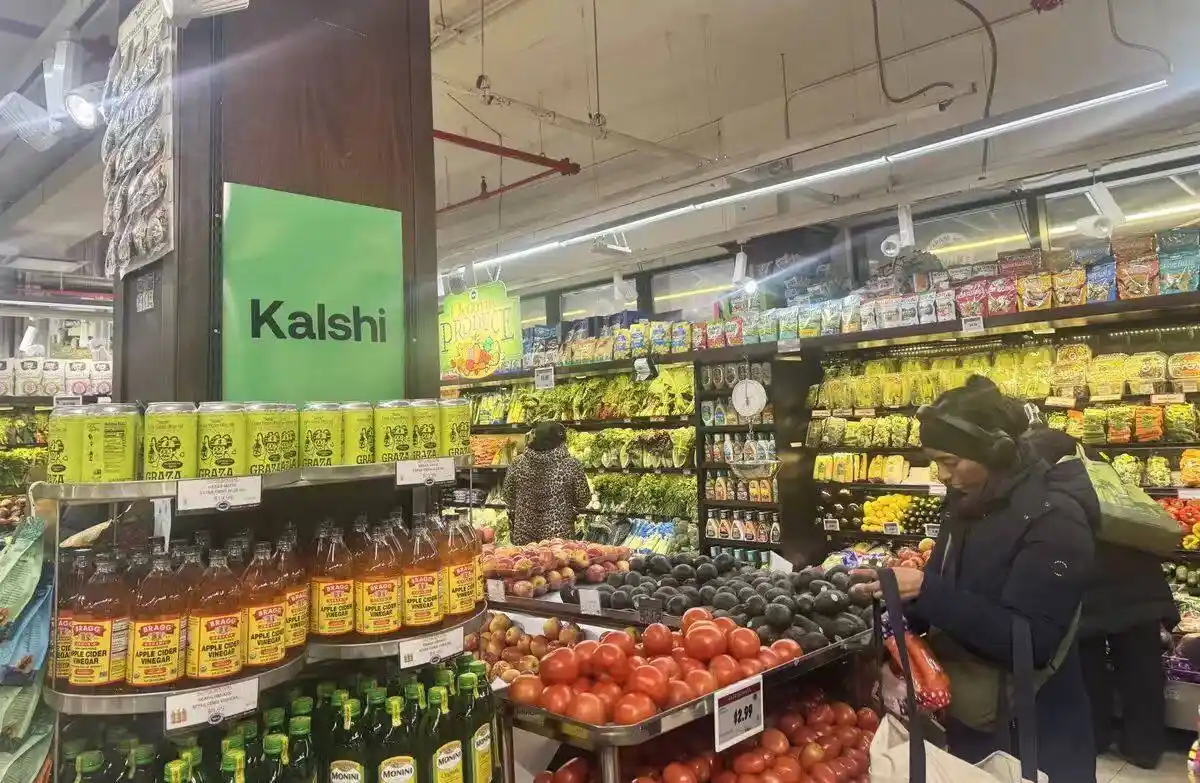
On February 3, Kalshi distributed $50 worth of free food benefits to some users at the West Market on 84 Third Avenue in New York for a limited time to attract more users to participate in various real-world event predictions on the platform.
Based on the surrounding "utility pole mini billboards," "supermarket interior KT boards," and other surrounding materials, Kalshi's offline ground promotion this time seemed more like an impromptu "flash mob event," that is, cooperating with local supermarkets to distribute some offline materials in a short period of time, using the "free $50 food giveaway" benefit as bait to attract people to line up to participate and observe the offline event. This point was also verified and confirmed by Connie.
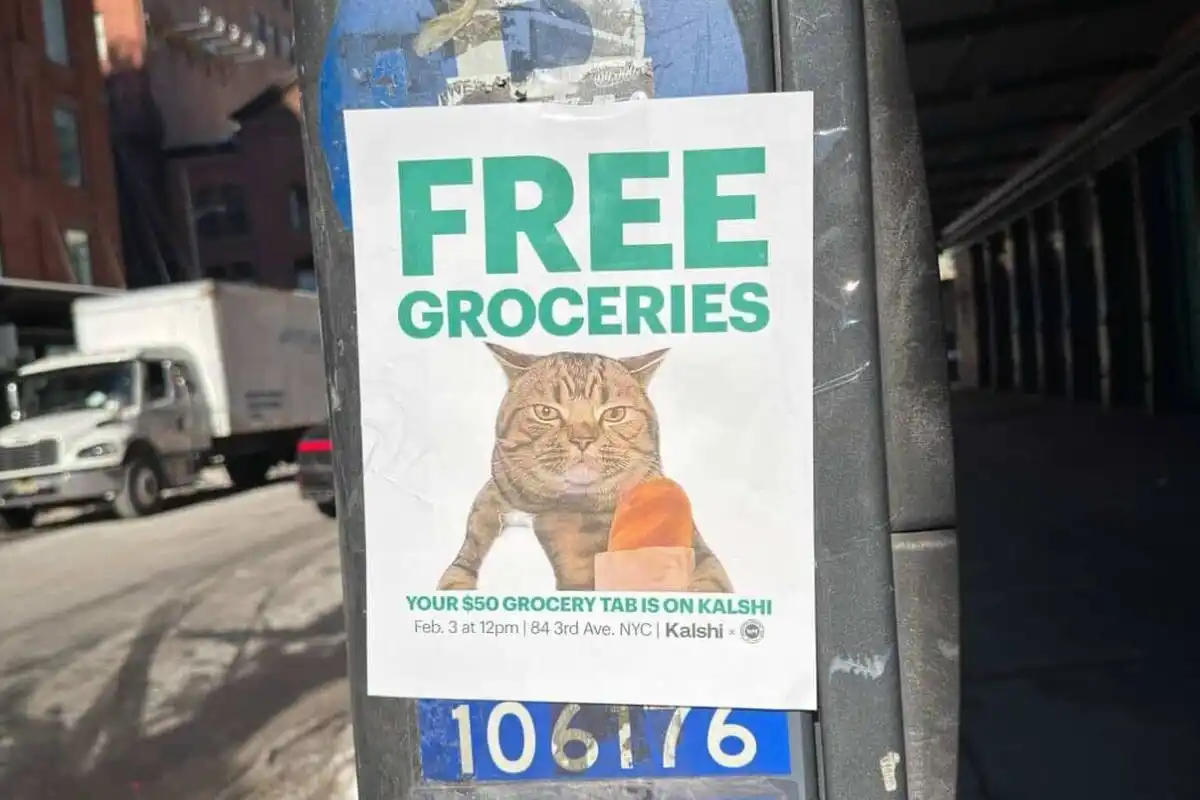
Additionally, it is evident that through this flash mob event, Kalshi hopes to involve more people in prediction markets with bet-able questions such as "Will this year's New York City oil price exceed $3.3," which are relatable, low-barrier, and easy to understand, to achieve branding and user acquisition goals.


Kalshi Co-Branded Flash Sale Eggs Sold Out
Compared to Kalshi's somewhat rough and highly commercial approach, Polymarket's preparations are undoubtedly more thorough.
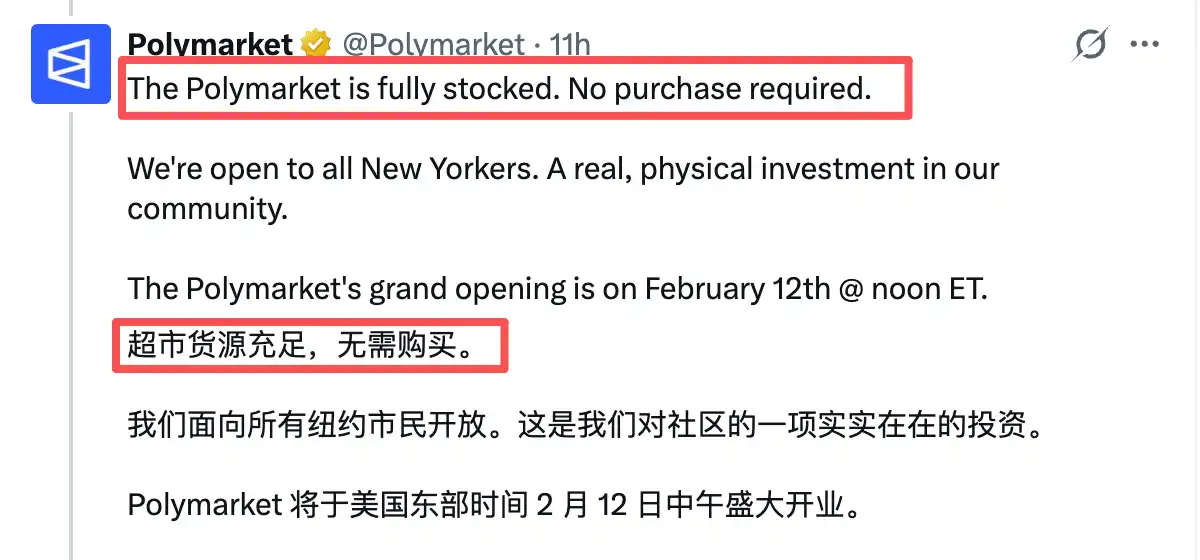
On February 3, slightly earlier than Kalshi's official announcement, Polymarket officially announced that after months of careful preparation, they plan to open the "first free grocery store in New York" through an offline store lease on February 12 (EST). Additionally, Polymarket has donated $1 million to the Food Bank For New York City to address the "hunger issue" in the area.
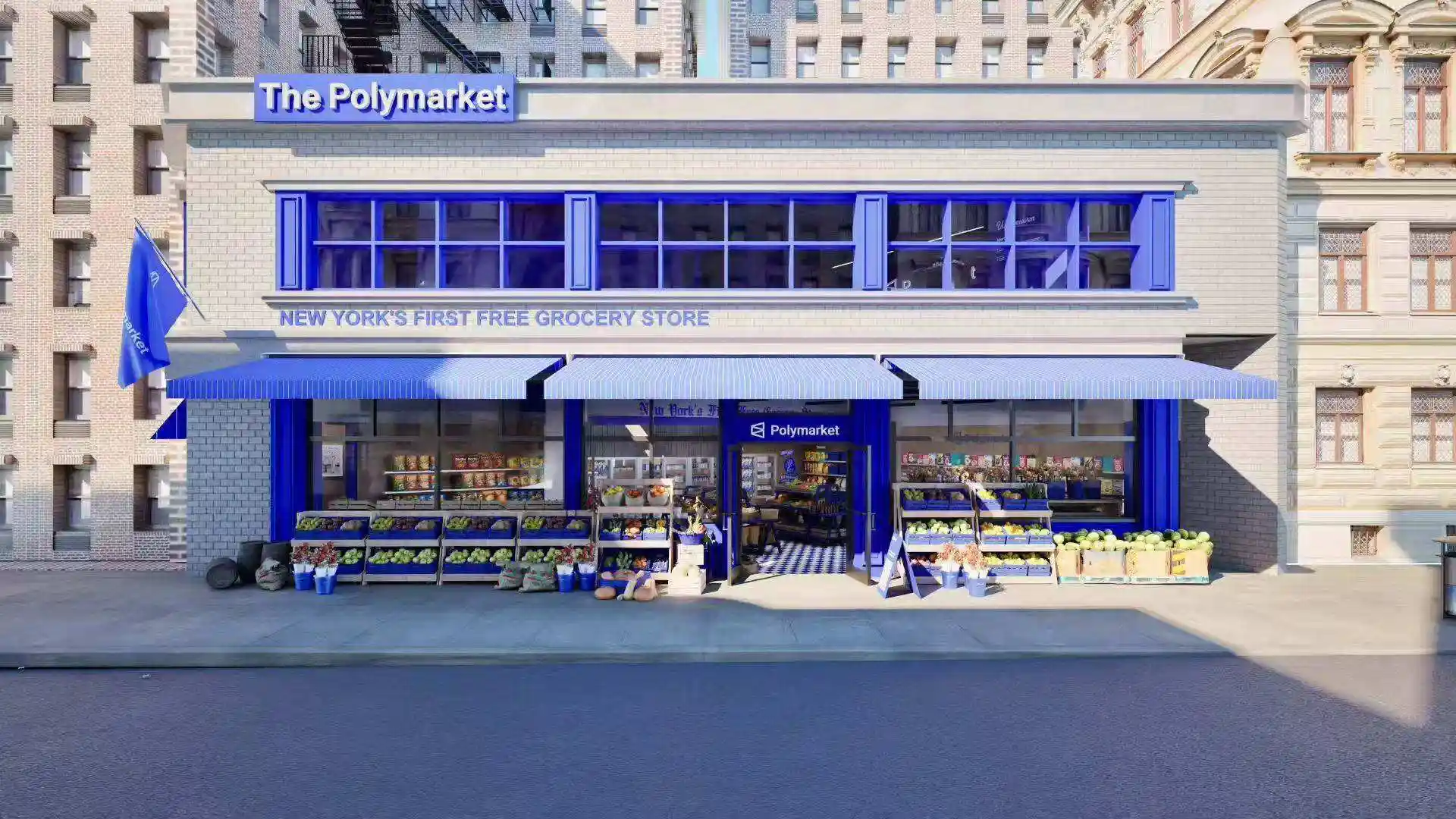
Polymarket also released real shots of offline distribution of vegetables such as tomatoes and eggplants, reminiscent of the bygone era of ground promotion on domestic internet platforms, with a strong sense of "Download the APP to receive eggs" and "First recharge to receive a newcomer's gift package."
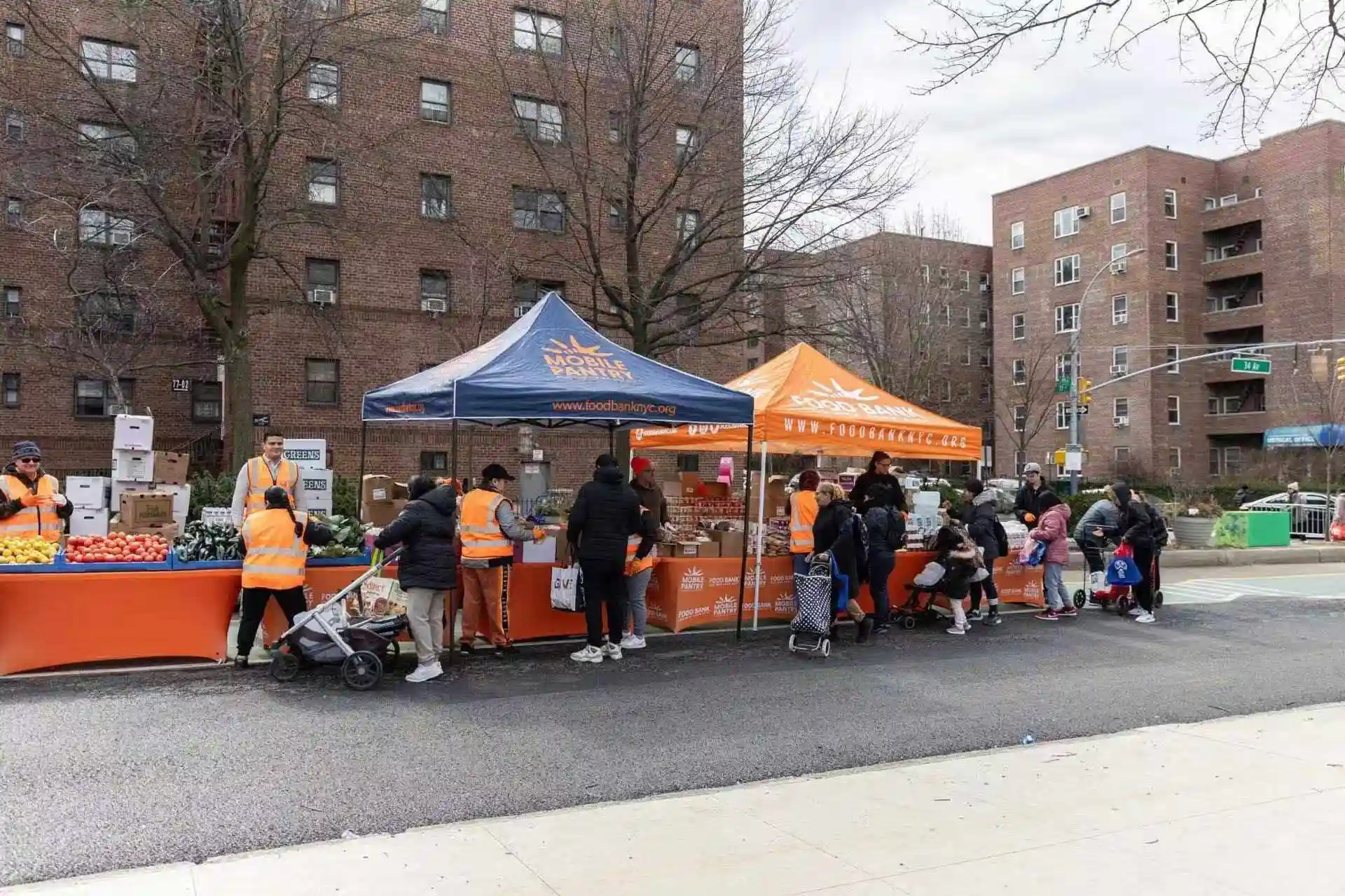
It is worth mentioning that Polymarket not only emphasizes that "Polymarket's offline store has sufficient supply, no purchase necessary," but also at the end of the tweet calls on everyone to donate to the Food Bank For New York City, encouraging people to take practical action to address the high food costs and the ongoing high cost of living leading to the "hunger problem."
Seeing this scene, it can't help but make me sigh—
False cryptocurrency project ground promotion: hold offline conferences, indulge in seafood meals, promote various false concept tokens;
Real cryptocurrency project ground promotion: distribute vegetables, give away eggs, open offline stores to provide free food, engage in charity and public welfare, and call on people to donate to show love.

Regarding the real purchasing power of the "Free Egg Event" for Kalshi and Polymarket, we also had a detailed discussion with Connie.
$50 Real Purchasing Power in New York, USA: 5 McDonald's Meals, 1.5 Pounds of Beef, or 2 Days of Meals for an Average Person
According to Connie, $50 in New York, USA, can also be considered "quite valuable."
“Buying 0.5 pounds of beef at a local supermarket in New York, USA costs approximately $18, and $50 can buy about 1.5 pounds of beef,” which is enough protein for an adult for three meals in a day. For comparison, the price of one pound of beef in China is only about 30 RMB, equivalent to 1/8 of the cost in New York, USA.

When converted to the well-known "McDonald's Index," the real purchasing power of $50 is also quite impressive—a takeaway order of a cheeseburger combo with 800-1000 calories costs about $10.89, and $50 can buy 5 combos; if you buy a 580-calorie double cheeseburger, it costs only around $7.2. Of course, this price would be considered "sky high" in China. For the same combo meal, the price in China is only about 25-40 RMB, costing only 1/2 of the same food in New York, USA.
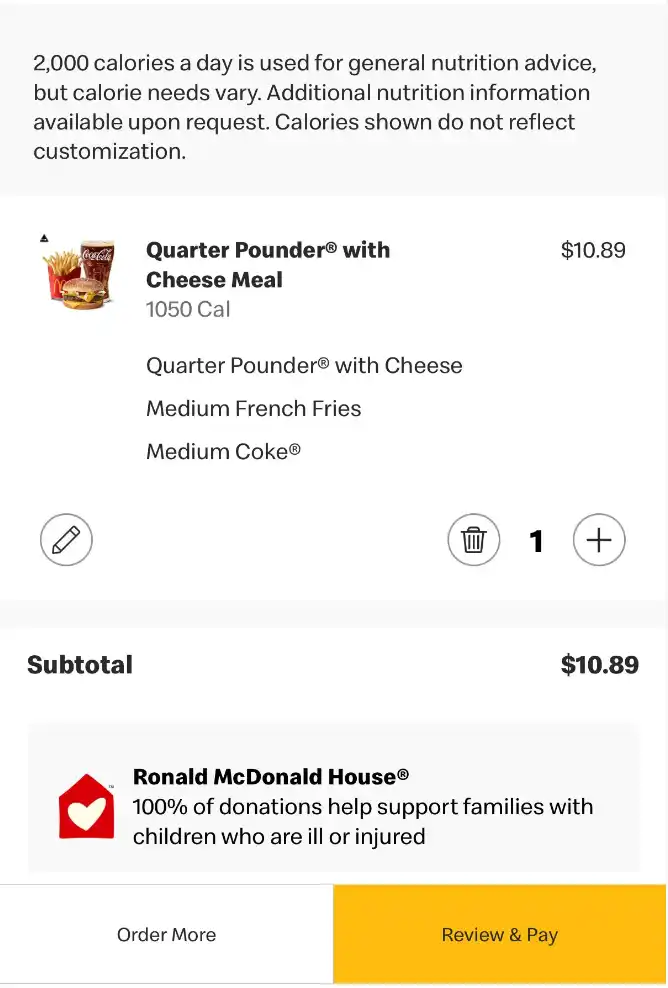
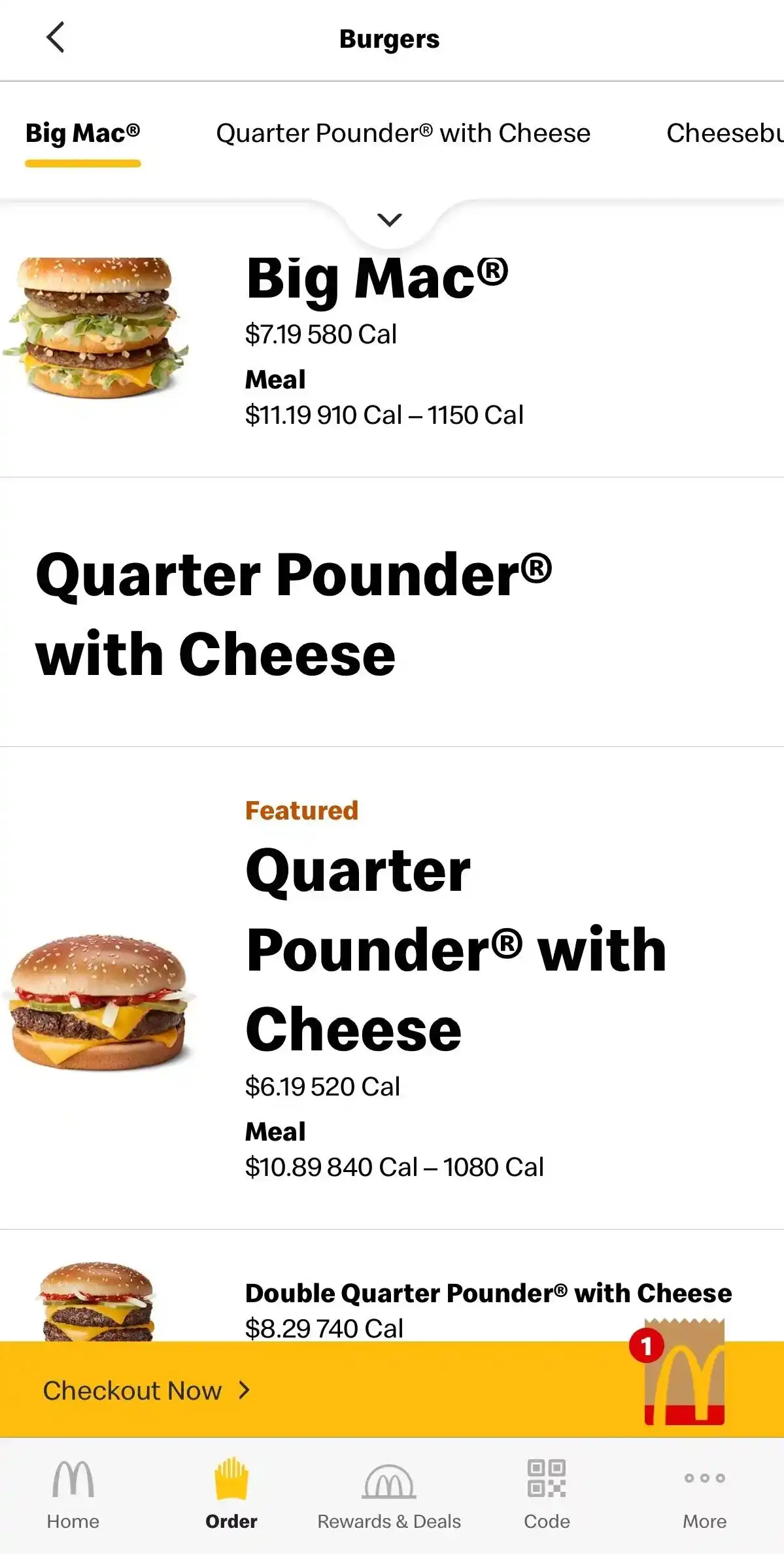
In other words, saving a little money, $50 is close to covering an average person's food cost in New York for about 2 days (calculated based on 5-6 meals). According to Connie, Kalshi's event has attracted many Americans to line up to "receive food," and even "the enthusiasm of Americans lining up to receive things is higher than that of Chinese people." Polymarket's "offline free grocery store" event is also estimated to attract a large number of people to line up and participate. Based on the information released by Kalshi and Polymarket, the upfront costs of the two platforms' related events are at least $50,000 to $100,000.
With such a significant investment of manpower and resources, aside from charity and goodwill, Kalshi and Polymarket, the two major prediction market platforms, also have their own "calculations."
The "Business Acumen" Behind Prediction Market Platforms' "Free Egg Giveaway": Influencing Regulatory Agencies with Political Issues
The above food donation activities by Kalshi and Polymarket were not coordinated or communicated with the New York City government, but were voluntary actions by the companies.
However, the external statements and purposes of both are very similar to the "policies" repeatedly emphasized by New York's newly elected mayor, Zohran Mamdani, during his campaign — the latter had proposed "opening public grocery stores in the five administrative regions of New York to lower food prices." Zohran Mamdani pointed out that city-owned grocery stores could reduce rent and operating costs through a non-profit operating model and the use of public property. This plan is currently in the pilot phase, and the final implementation schedule has not yet been determined.
On the other hand, as one of the key states in the United States, New York legislators are actively issuing new bills regarding the prediction market, an emerging industry track. Among them, the "ORACLE Bill" plans to restrict or prohibit New York residents from betting on certain prediction market events and impose stricter restrictions on event-based prediction markets. Another bill plans to require prediction market operators to obtain a license from the state government before operating.
It is evident that some legislators still have various concerns about the prediction market, viewing it as akin to unregulated gambling or more susceptible to insider manipulation.
In view of this, although the New York City mayor does not have direct regulatory authority over the prediction market (note from the author: regulatory authority over prediction market platforms belongs to state and federal governments), Kalshi and Polymarket's actions may also be an indirect attempt to seek regulatory friendliness.
Lastly, regardless of how the actions of the two regarding "egg donation" ultimately impact, we have to acknowledge that the promotion model of Chinese internet platforms may be at least 5-10 years ahead of the Western world.
You may also like

Japan’s Three Megabanks Plan Joint Stablecoin Issuance in Fiscal 2026
MUFG, SMBC, and Mizuho reportedly plan to jointly issue fiat-pegged stablecoins in fiscal 2026, signaling Japan’s growing push into bank-led digital payment infrastructure.

Humanity Discloses H Token Dual-Chain Attack Details, With Losses on Ethereum and BSC Exceeding $36 Million
Humanity said the H token attack across Ethereum and BSC caused more than $36 million in losses after leaked ProxyAdmin keys enabled malicious contract upgrades and token minting.

White House Discusses CLARITY Act With Law Enforcement Ahead of Senate Vote
The White House discussed the CLARITY Act with law enforcement ahead of a Senate vote, focusing on illicit finance risks and developer protections.

$75 billion in foreign capital has fled, and South Korean retail investors have absorbed it all using leverage

Bitcoin Trading Guide 2026: Strategies for Experienced Traders

What Is XAUT and PAXG? Why Tokenized Gold Is Booming in 2026

Cryptocurrency CEXs are flocking to sell US stocks, and traditional brokerages are facing an "uninvited guest."

Will the SpaceX IPO Hurt Bitcoin? Here's What Traders Are Watching
Foreign selling in the South Korean stock market accelerates, with cumulative net sales reportedly reaching $75 billion this year
On June 9, The Kobeissi Letter, citing Goldman Sachs data, reported that global investors are selling South Korean stocks at an unusually rapid pace. In the latest trading session, foreign investors sold about $801 million worth of Kospi constituent stocks again; total foreign outflows last week reached about $10 billion, and the market has been in net foreign selling on nearly every trading day over the past month. According to the data cited in the report, foreign investors have sold about $75 billion worth of South Korean stocks so far this year. Meanwhile, South Korean retail and institutional investors together recorded roughly $69 billion in net buying over the same period, suggesting that the market’s main buying support has come from domestic capital rather than returning overseas funds. The information currently disclosed still mainly comes from The Kobeissi Letter’s retelling and Goldman Sachs data summaries, while public details on the statistical period and the specific definition of “selling” remain relatively limited.

Fortune Warns of Strategy’s Financing Structure Risks as Bitcoin Premium Narrows
Fortune warned that Strategy’s Bitcoin treasury model faces growing financing risks as MSTR’s net asset premium narrows and preferred stock dividend pressure increases.

Ferrari Challenge Le Mans: Carl Moon to Dominate in WEEX Livery

Sahara AI Responds to SAHARA’s Sharp Drop: No Contract or Product Security Issues Found, Internal Investigation Underway
Sahara AI responded to SAHARA’s 60% price drop, saying no token contract or product security issues have been found and an internal investigation is underway.

WEEX Deposit/Withdrawal Dynamic Island: Your Asset Status, Always in Sight
Scaling Crypto Derivatives: The Digital Asset Infrastructure Behind High-Volume Trading
In the fast-moving digital asset ecosystem, derivatives platforms face an extreme architectural test. High-leverage futures markets demand more than just standard security—they require absolute operational precision, zero-latency matching engines, and ironclad structural scalability, all while navigating intense market volatility.
As global platforms scale to meet these demands, the industry is shifting away from rigid, monolithic setups toward a more agile, "decoupled" infrastructure philosophy.
The Blueprint for High-Volume Copy TradingFor elite global exchanges like WEEX (founded in 2018), this architectural choice becomes critical when scaling high-volume retail features like social copy trading. When thousands of users automatically mirror the real-time strategies of elite traders simultaneously, it triggers sudden, monumental spikes in concurrent transactional volume.
To prevent execution latency or settlement bottlenecks during these peak volatility events, a platform's primary engine must remain entirely dedicated to risk management, copy-trade synchronization, and order matching.
The Architectural Rule: New-generation platforms must separate front-end user execution engines from heavy backend infrastructural overhead to eliminate operational friction.
By separating these layers, platforms can maintain complete sovereignty over their trading environments and user experiences while strategically aligning with institutional-grade infrastructure ecosystems. This strategic framework allows modern exchanges to leverage advanced Digital Asset Custody infrastructure such as Cobo’s behind the scenes, ensuring that backend wallet management scales elastically alongside trading spikes.
Capitalizing on Market Momentum and 400× LeverageIn a derivatives arena where platforms offer up to 400× leverage on perpetual contracts, capital efficiency and market agility are core business metrics. To capture market momentum, an exchange needs the ability to rapidly expand its asset offerings, supporting everything from legacy crypto assets to sudden, trending altcoins across a massive library of trading pairs.
Adopting a flexible, scalable Wallet-as-a-Service (WaaS) solution such as Cobo’s could completely rewrite the development timeline for high-growth exchanges. Instead of spending months of engineering capital building out custom backend wallet architectures for every new blockchain network, platforms can deploy localized infrastructure in days.
This agility allows platforms to instantly scale their listings to over a thousand trading pairs without compromising security or delaying time-to-market. It mirrors the exact operational advantages seen during high-velocity market events, similar to how advanced wallet infrastructure empowers platforms during sudden asset surges; allowing exchanges to pass that speed and liquidity directly to their global user base.
A Mature Foundation for GrowthThe synergy between trusted infrastructure ecosystems and global trading platforms represents the natural evolution of a maturing crypto market. As WEEX continues to scale its global spot and derivatives offerings for over 6 million users, adopting robust backend paradigms proves that platforms no longer have to compromise between cutting-edge trading velocity and uncompromised structural security.

Morning Report | BitMine increased its holdings by 126,971 ETH last week; trader Eugene announced his exit from the crypto market

Wang Chuan: How can one not feel anxious after the neighbor Old Wang made thirty times profit by investing in storage stocks? (Seven) - A quarter-century cycle

Get Paid to Onboard? Try WEEX’s New Homepage with Rewards for Registration, Deposit & Trade
WEEX Custom Layout: Build Your Perfect Trading Workspace in Seconds
Japan’s Three Megabanks Plan Joint Stablecoin Issuance in Fiscal 2026
MUFG, SMBC, and Mizuho reportedly plan to jointly issue fiat-pegged stablecoins in fiscal 2026, signaling Japan’s growing push into bank-led digital payment infrastructure.
Humanity Discloses H Token Dual-Chain Attack Details, With Losses on Ethereum and BSC Exceeding $36 Million
Humanity said the H token attack across Ethereum and BSC caused more than $36 million in losses after leaked ProxyAdmin keys enabled malicious contract upgrades and token minting.
White House Discusses CLARITY Act With Law Enforcement Ahead of Senate Vote
The White House discussed the CLARITY Act with law enforcement ahead of a Senate vote, focusing on illicit finance risks and developer protections.
$75 billion in foreign capital has fled, and South Korean retail investors have absorbed it all using leverage
Bitcoin Trading Guide 2026: Strategies for Experienced Traders
What Is XAUT and PAXG? Why Tokenized Gold Is Booming in 2026


