
SUI Surges 30% Intraday, What are Some Ecosystem Projects Worth Paying Attention To?




After the market welcomed both Trump and Musk's "backing down," the crypto market also followed suit with a surge in futures. Amidst a pleasing sea of green, the SUI ecosystem token stood out with a significant double-digit price increase. According to market data, the SUI ecosystem saw a remarkable 24-hour overall increase of 23.1%, with leading projects like DeepBook recording gains of over 120%.
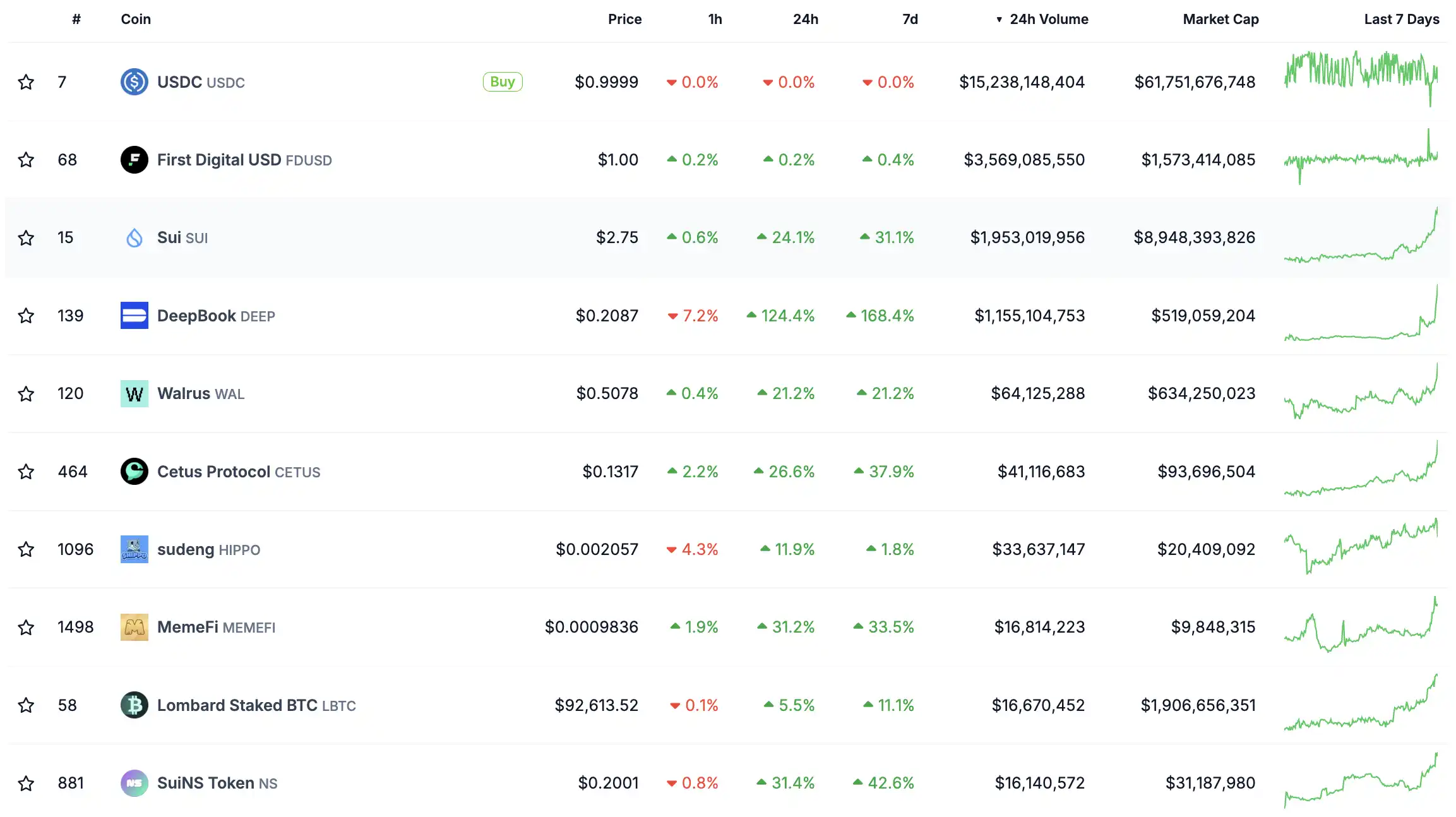
Data Source: coingecko
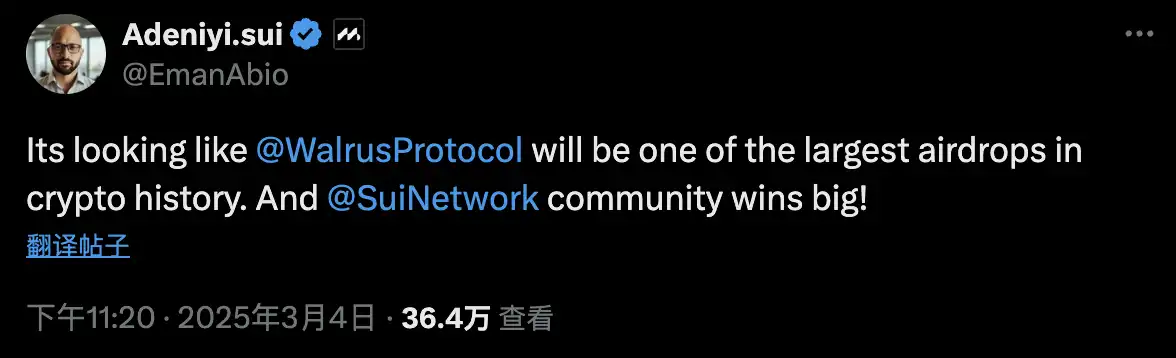
From being dubbed the Move system's twin star alongside Apt to being included in the strategic reserves of the Trump family fund WLFI, SUI's strategy has gradually shifted from a gaming focus to a trading chain. Last month, the Walrus project airdropped its token, and participants in the airdrop after the TGE expressed that they "didn't get enough." Walrus's parent company, MystenLabs, CPO once stated that Walrus would be one of the largest airdrops in history. While it may not be the largest, its marketing goal has been achieved.
Since then, MystenLabs' strategy is mostly ready, with SUI and the storage public chain Walrus mutually promoting on-chain. They have developed SUI's native order book integrated DeepBook to provide liquidity, the in-app protocol with built-in royalties makes GameFi more scalable, and SUI Name Service for "domain names," Getstashed for "mobile payments," SUI Wallet for "wallets" complemented by Enoki and zkLogin technologies, making SUI an extremely friendly environment for ecosystem projects looking to build on the mobile side.
Besides the official ecosystem, as the SUI ecosystem leads the market in a warming trend, which projects are worth keeping an eye on during this surge? Let's delve into that.
DeFi Field
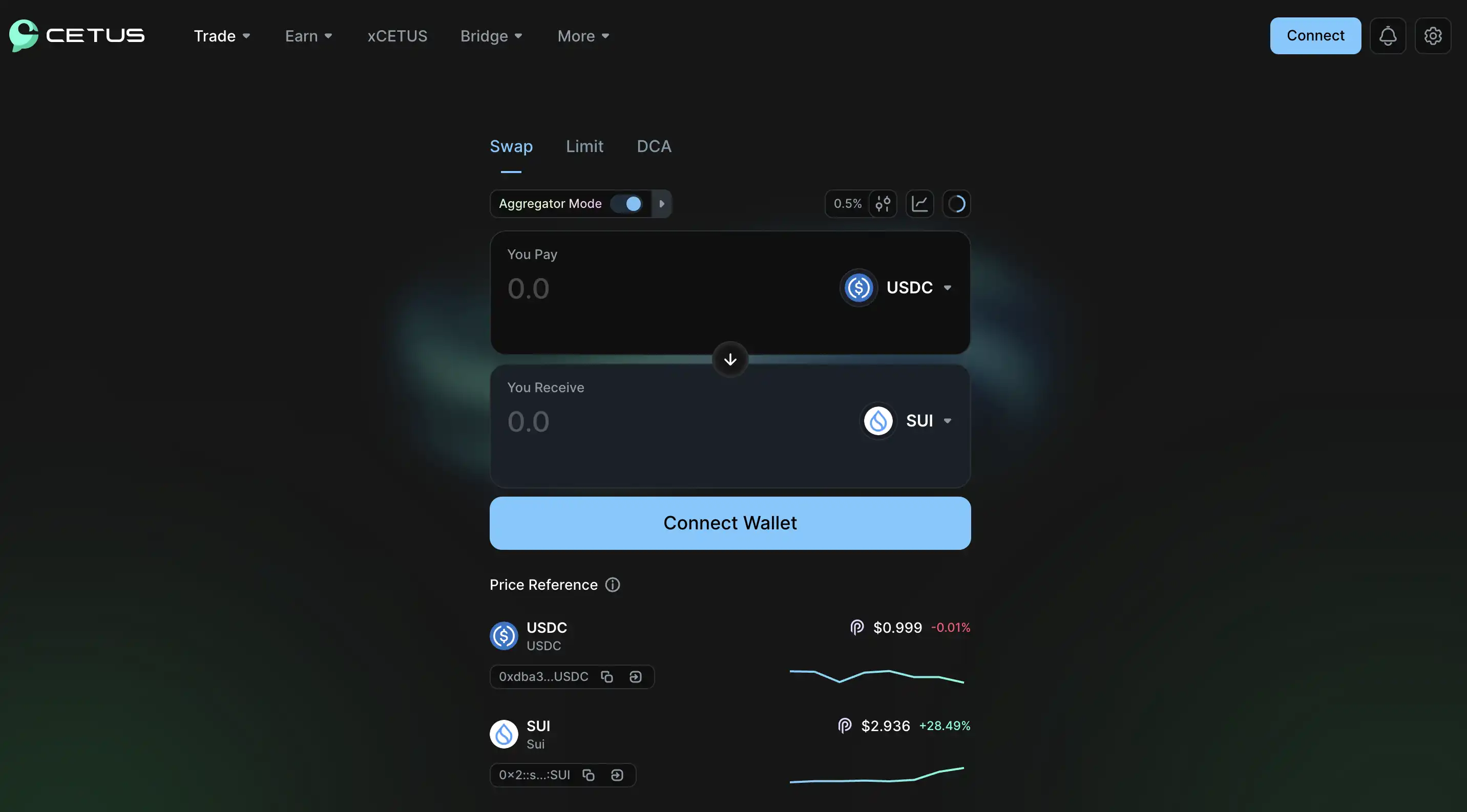
As an early liquidity protocol on Sui, Cetus saw a 25% daily price increase of its platform token $CETUS during the recent general surge in the SUI ecosystem, nearly doubling its market value in the past two weeks. The platform primarily offers exchange functionality with limit orders, as well as tools like mining, liquidity pools, and treasury. Its DeepBook interface provides a direct pathway for regular users to access Sui's native liquidity layer.
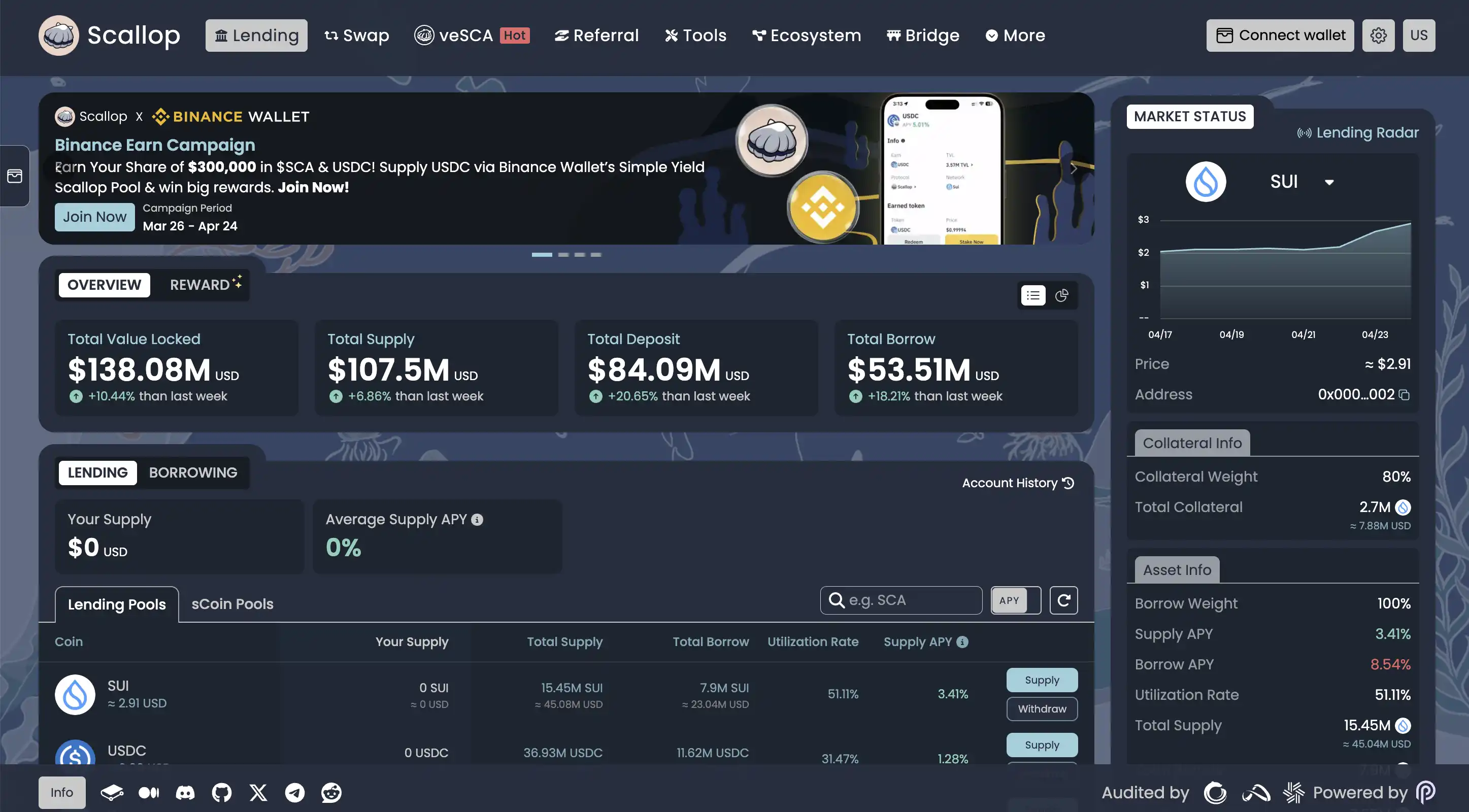
Lending platform Scallop is another early Sui DeFi protocol that allows users to deposit SUI into pools to earn interest or participate in more advanced lending strategies. Besides lending, Scallop now supports exchange functionality and provides cross-chain bridge capabilities.
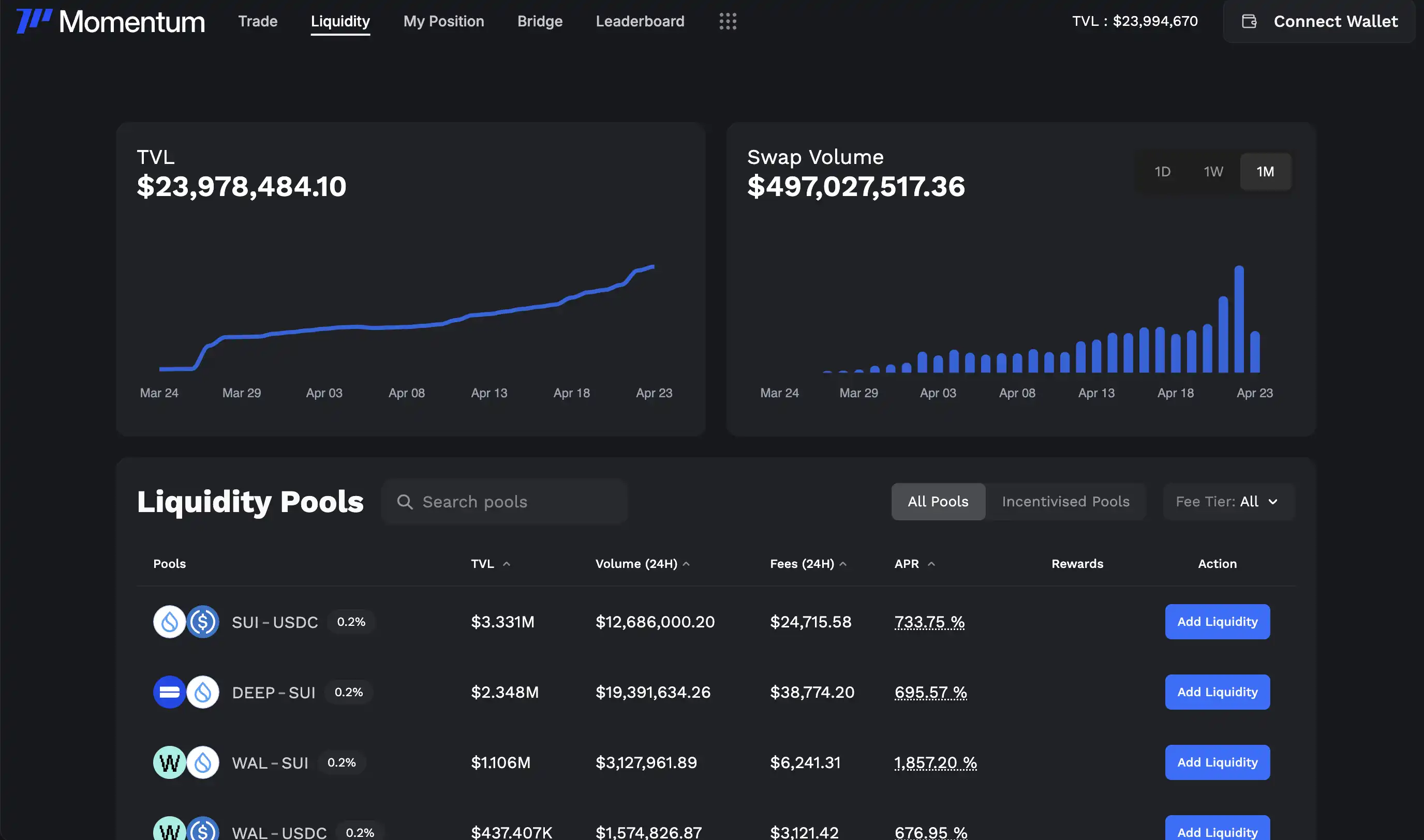
Founded by former Meta employee Wendy Fu and backed by VC firms like Jump Crypto, Coinbase Ventures, and Amber Group, Momentum is seen as Move's liquidity solution. Both public chains in the Move ecosystem, Sui and Aptos, are also part of the investment lineup. It is currently the largest stablecoin integration platform on SUI. Some stablecoin trading pairs' LPs have a fairly attractive APR, with some airdrop expectations.
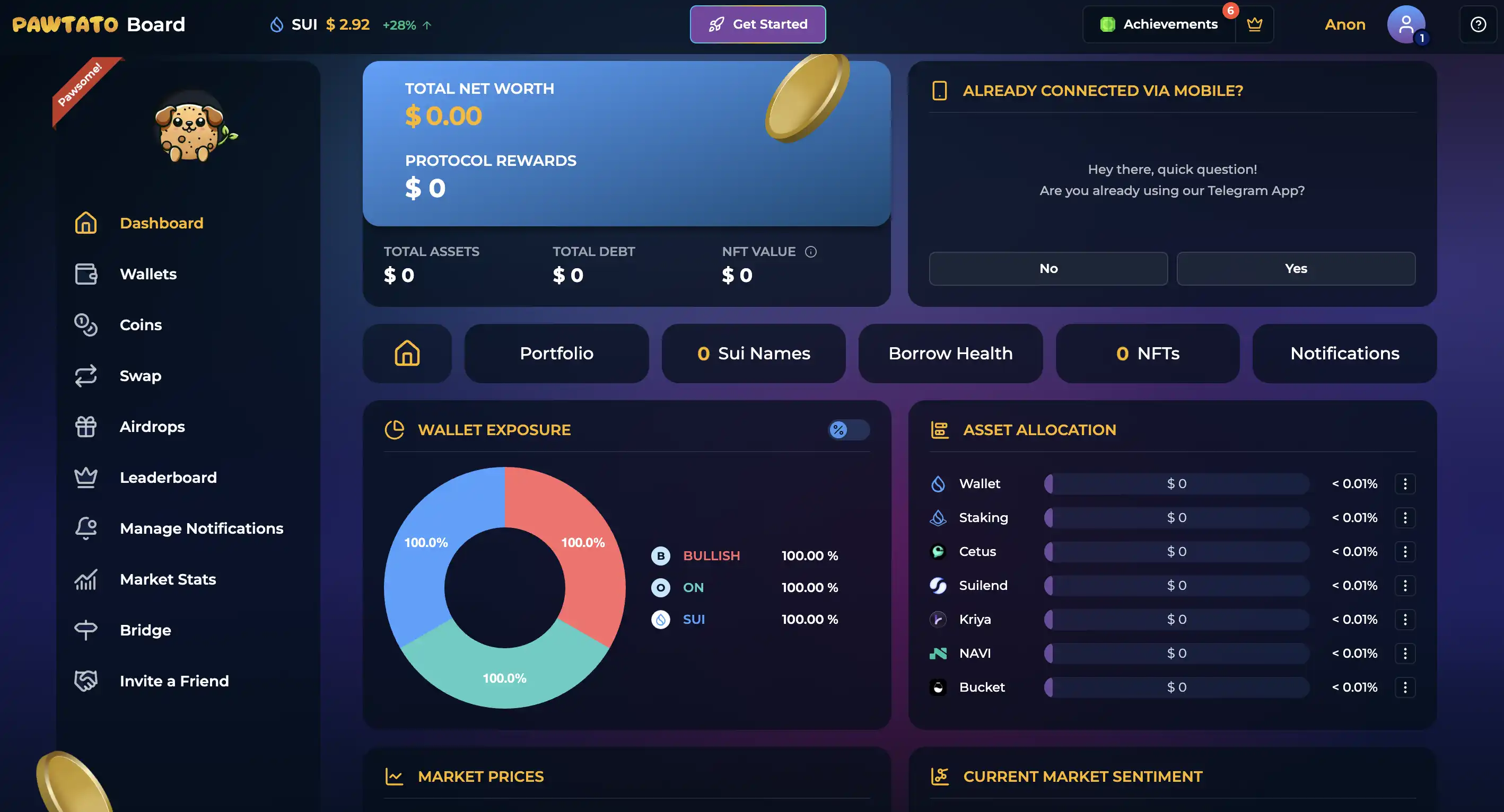
An integrated platform for DeFi dApps and wallets on SUI, serving as a dashboard for the SUI DeFi ecosystem. It made it to the finals of the first Sui Pitch Day, an event where project teams directly showcase their projects to a judging panel composed of VCs and investors to secure funding.
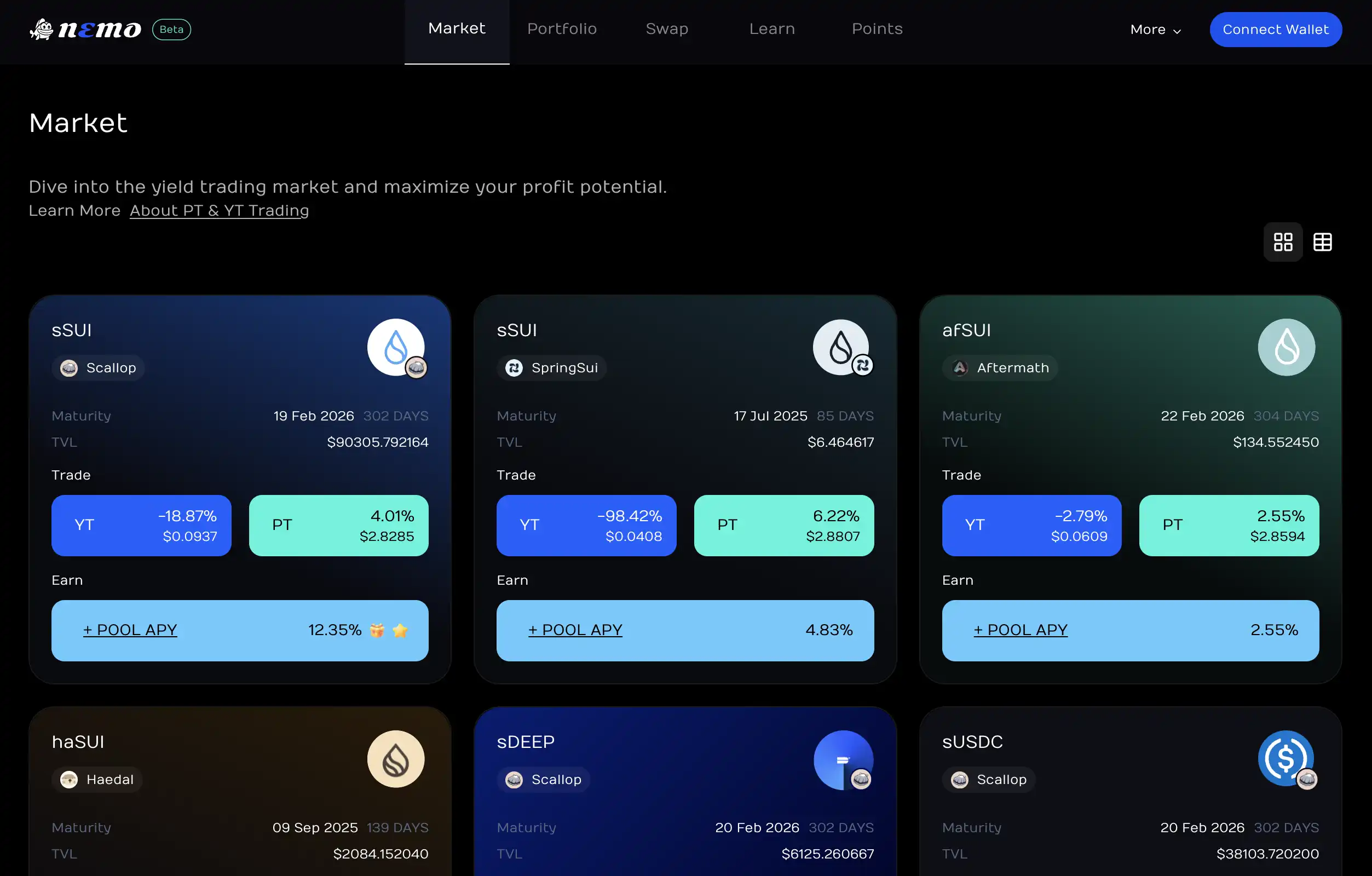
Nemo is a native yield trading platform where users can go long on yield or hedge yield risk. It also made it to the Sui Pitch Day finals, having previously received support from Sui Grants and the Hydropower Accelerator Program.
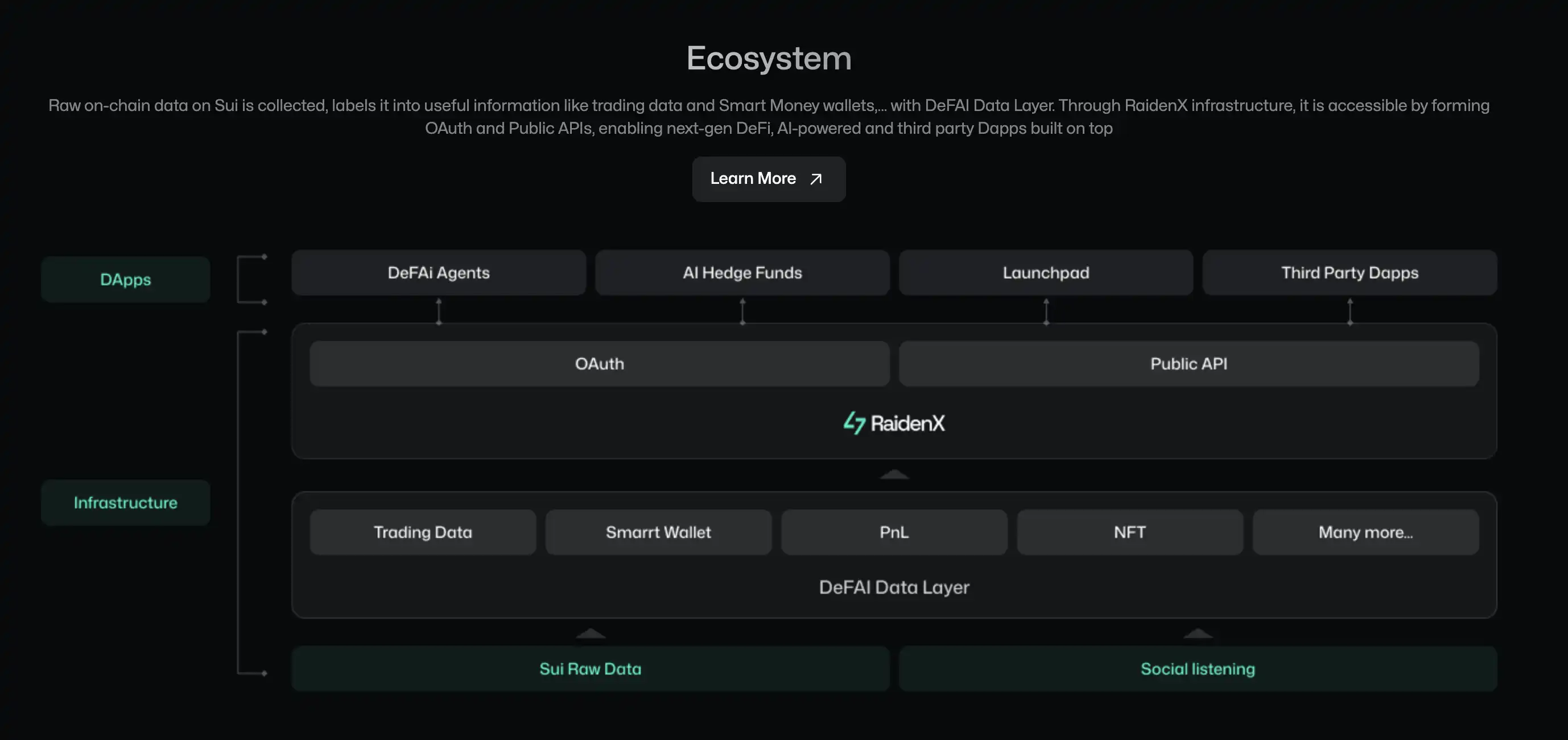
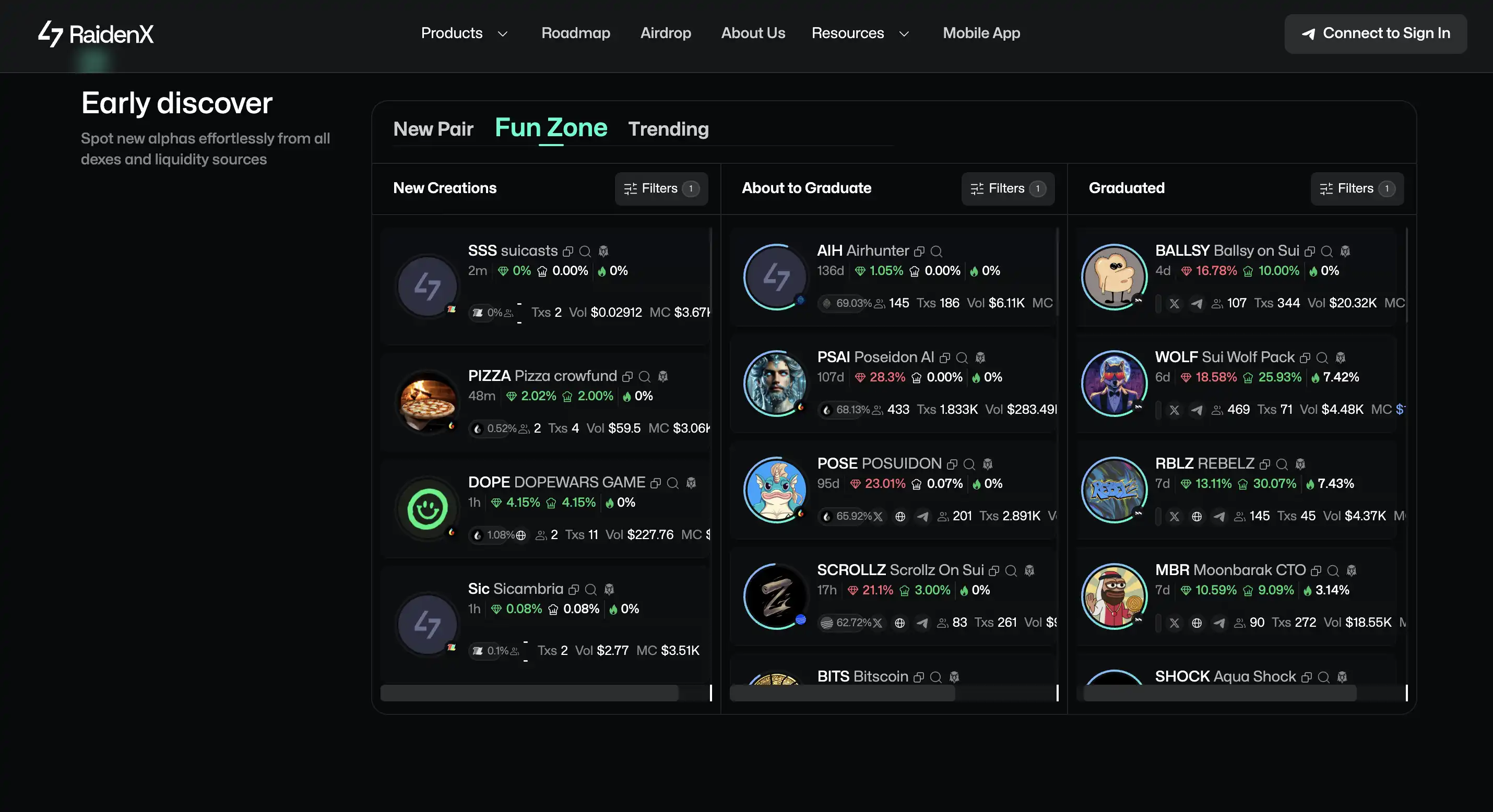
During this cycle, the MemeCoin ecosystem on SUI has not yet taken off. Since the previous cycle's $Hippo peaked at a $30 million market cap, there haven't been many Meme projects, resulting in limited support from well-known TradingBots. Therefore, SUI's native RaidenX has taken up the mantle in this area. Besides integrating trading, the project has also expanded its scope. In addition to being a TradingBot, RaidenX will also serve as the infrastructure for DeFAI development.
AI Related
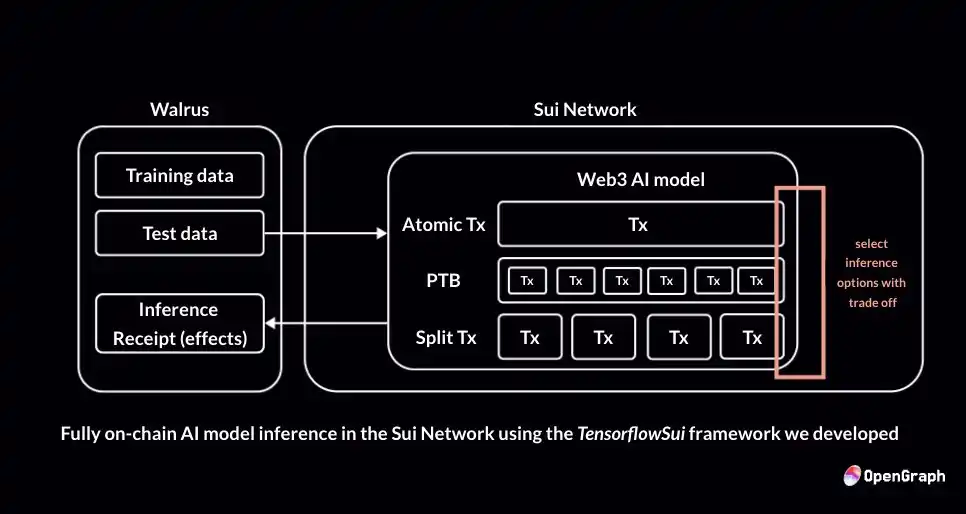
OpenGraph is a comprehensive end-to-end Agent flow technology framework deployed on Sui and Walrus, providing chain-based model deployment, chain-based inference execution, chain-based result storage, and other features for AI Agents.
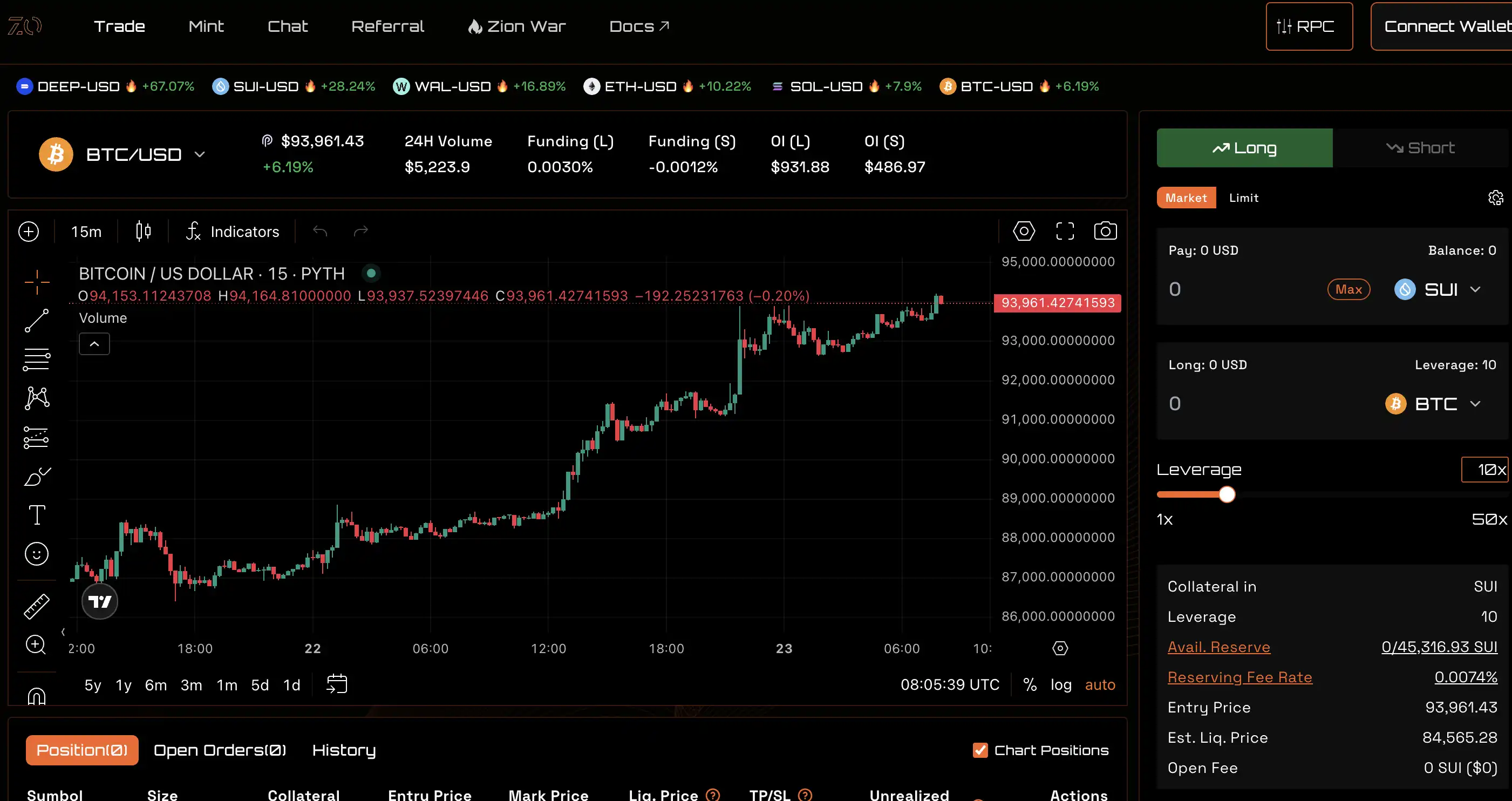
ZO is an AI perpetual contract protocol developed by Sudo Finance. It is equipped with an AI Agent that can provide personalized trading suggestions and manage portfolios. Users can also engage with the Agent SDK to integrate their own AI Agent for trading.
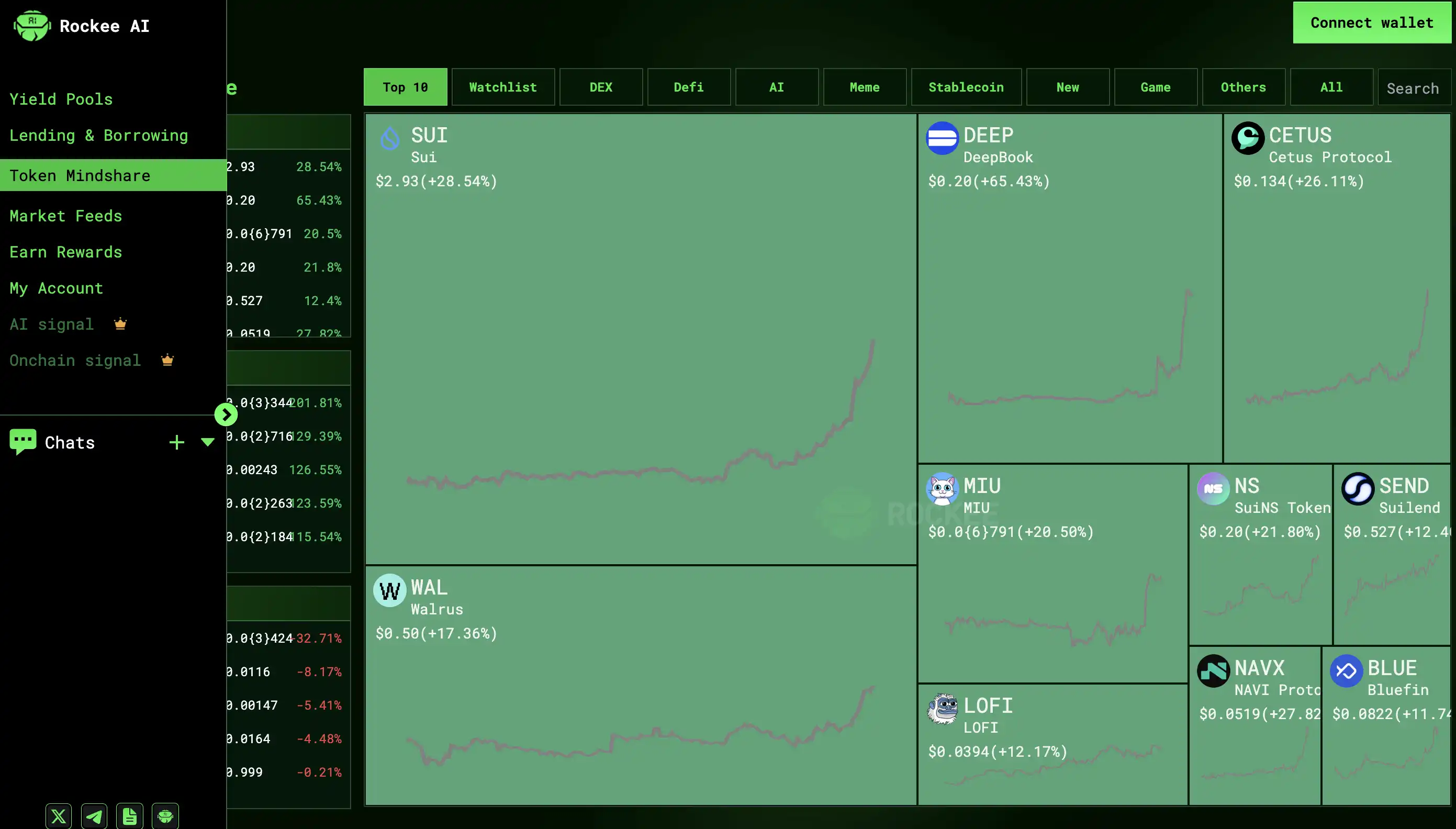
RockeeAI is a DeFAI integrated Agent that can achieve functional design at various levels of DeFi, allowing users to interact directly with the AI agent through an application and request relevant data on topics such as project details, contract addresses, token prices, and yield strategies. The AI agent then gathers information from multiple trusted sources and presents it to the user in a naturally understandable way.
In addition, it can automatically trade based on user's natural language, retrieve the latest market data to provide market analysis to the user, integrate social media platforms, news media, and data from community platforms such as Telegram, Discord, Reddit, analyzing off-chain factors at the community sentiment level.
NFT Market
SuiFrens is an NFT officially issued by Mysten to showcase the scalability of the Move series. It has two main features. Firstly, this NFT implements dynamic rendering, meaning the holder can put on or take off accessories on the NFT at any time, and creators and brands can freely create accessories on SuiFrens. Secondly, it has an NFT breeding system where owners can Mix any two SuiFrens they own or have permission to use. During the Mix process, each offspring has a high probability of inheriting existing traits from the parents and also a chance of mutation to create more combinations.
THE MF SQUID MARKET is an NFT issued on the SUI MPC network by IKA, which the community believes is related to the future token $IKA to be issued. The current floor price is 42 SUI, and the daily trading volume on the Move cross-chain NFT platform TradePort has reached 7300 SUI.
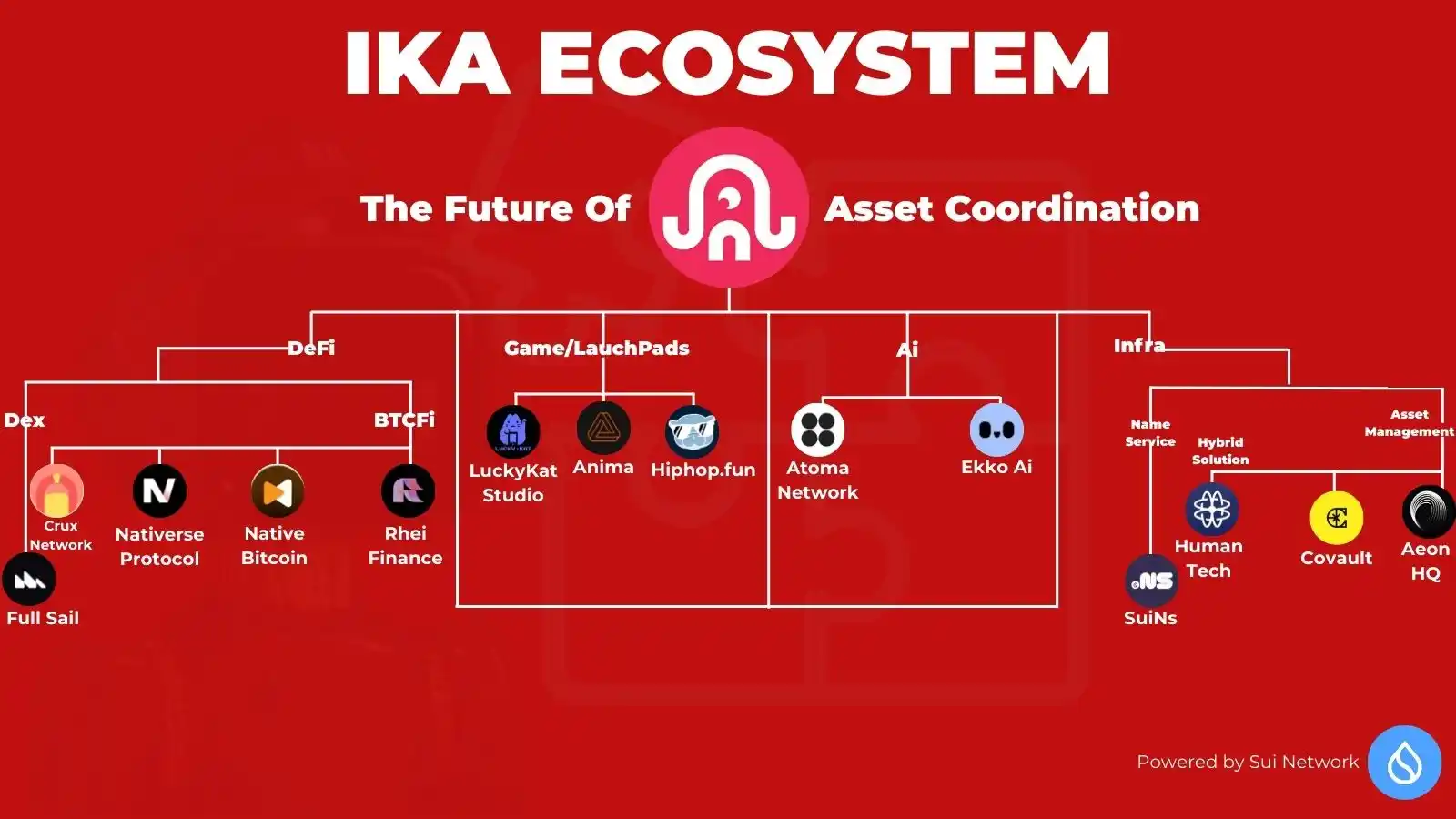

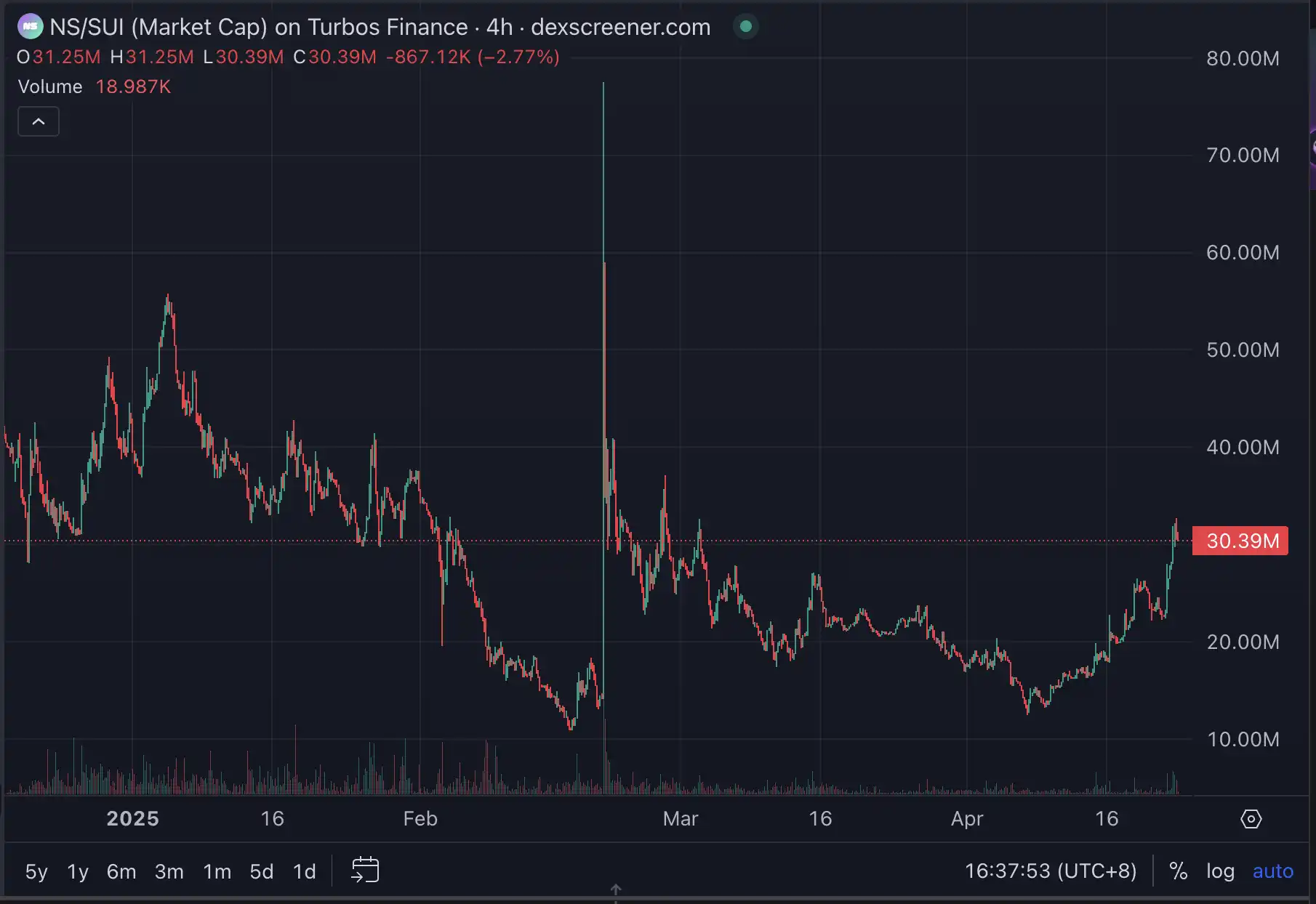
As the native domain system of SUI, the Sui Name Service converts complex blockchain addresses into human-readable names. Currently, there are 400,000 registered domain names. The Sui Name Service has now been acquired by official MystenLabs and is developing as an important part of the SUI ecosystem. Its project token $NS has performed remarkably well in this SUI ecosystem uptrend, with a 300% market value increase this month.
With the collective warming of the SUI ecosystem, many new projects have emerged in SUI. With the support of Move's technology, SUI's high throughput and low latency are also highly anticipated for its future development prospects in payments and DeAI. BlockBeats will continue to track its new developments.
You may also like

WEEX Deposit/Withdrawal Dynamic Island: Your Asset Status, Always in Sight

Scaling Crypto Derivatives: The Digital Asset Infrastructure Behind High-Volume Trading
In the fast-moving digital asset ecosystem, derivatives platforms face an extreme architectural test. High-leverage futures markets demand more than just standard security—they require absolute operational precision, zero-latency matching engines, and ironclad structural scalability, all while navigating intense market volatility.
As global platforms scale to meet these demands, the industry is shifting away from rigid, monolithic setups toward a more agile, "decoupled" infrastructure philosophy.
The Blueprint for High-Volume Copy TradingFor elite global exchanges like WEEX (founded in 2018), this architectural choice becomes critical when scaling high-volume retail features like social copy trading. When thousands of users automatically mirror the real-time strategies of elite traders simultaneously, it triggers sudden, monumental spikes in concurrent transactional volume.
To prevent execution latency or settlement bottlenecks during these peak volatility events, a platform's primary engine must remain entirely dedicated to risk management, copy-trade synchronization, and order matching.
The Architectural Rule: New-generation platforms must separate front-end user execution engines from heavy backend infrastructural overhead to eliminate operational friction.
By separating these layers, platforms can maintain complete sovereignty over their trading environments and user experiences while strategically aligning with institutional-grade infrastructure ecosystems. This strategic framework allows modern exchanges to leverage advanced Digital Asset Custody infrastructure such as Cobo’s behind the scenes, ensuring that backend wallet management scales elastically alongside trading spikes.
Capitalizing on Market Momentum and 400× LeverageIn a derivatives arena where platforms offer up to 400× leverage on perpetual contracts, capital efficiency and market agility are core business metrics. To capture market momentum, an exchange needs the ability to rapidly expand its asset offerings, supporting everything from legacy crypto assets to sudden, trending altcoins across a massive library of trading pairs.
Adopting a flexible, scalable Wallet-as-a-Service (WaaS) solution such as Cobo’s could completely rewrite the development timeline for high-growth exchanges. Instead of spending months of engineering capital building out custom backend wallet architectures for every new blockchain network, platforms can deploy localized infrastructure in days.
This agility allows platforms to instantly scale their listings to over a thousand trading pairs without compromising security or delaying time-to-market. It mirrors the exact operational advantages seen during high-velocity market events, similar to how advanced wallet infrastructure empowers platforms during sudden asset surges; allowing exchanges to pass that speed and liquidity directly to their global user base.
A Mature Foundation for GrowthThe synergy between trusted infrastructure ecosystems and global trading platforms represents the natural evolution of a maturing crypto market. As WEEX continues to scale its global spot and derivatives offerings for over 6 million users, adopting robust backend paradigms proves that platforms no longer have to compromise between cutting-edge trading velocity and uncompromised structural security.

Morning Report | BitMine increased its holdings by 126,971 ETH last week; trader Eugene announced his exit from the crypto market

Wang Chuan: How can one not feel anxious after the neighbor Old Wang made thirty times profit by investing in storage stocks? (Seven) - A quarter-century cycle

Get Paid to Onboard? Try WEEX’s New Homepage with Rewards for Registration, Deposit & Trade

WEEX Custom Layout: Build Your Perfect Trading Workspace in Seconds

See “Buy Walls” & “Sell Walls” Instantly: WEEX Launches the Depth Chart for Smarter Trades

What Is Quick Trade on WEEX? 2 Ways WEEX Ends Chart-Panel Jumping
Morning News | Five major virtual asset platforms in South Korea have experienced 57 incidents of hacking and system failures in six years; Grayscale submits registration application for Canton ETF

Should we escape the peak? The principle of the tail-end market in the stock market

RootData: May 2026 Cryptocurrency Exchange Transparency Research Report

Founder of Baixing.com: My Experience with Claude Code in Fourteen Points

Yang Ge Gary: Agent Economics and AI Microeconomics
When reasoning becomes a scarce resource, who captures its value?

Jensen Huang dramatically "rescues" the South Korean stock market

Stablecoins vs Deposit Tokens: On the surface, they seem like opposing sides, but in reality, they are interconnected

Bitcoin Crash to $50,000 or Bear Trap Before $100,000? Deep Dive for WEEX Traders
How Could the SpaceX IPO Affect Bitcoin, Altcoins season, and Crypto Liquidity?
WEEX Deposit/Withdrawal Dynamic Island: Your Asset Status, Always in Sight
Scaling Crypto Derivatives: The Digital Asset Infrastructure Behind High-Volume Trading
In the fast-moving digital asset ecosystem, derivatives platforms face an extreme architectural test. High-leverage futures markets demand more than just standard security—they require absolute operational precision, zero-latency matching engines, and ironclad structural scalability, all while navigating intense market volatility.
As global platforms scale to meet these demands, the industry is shifting away from rigid, monolithic setups toward a more agile, "decoupled" infrastructure philosophy.
The Blueprint for High-Volume Copy TradingFor elite global exchanges like WEEX (founded in 2018), this architectural choice becomes critical when scaling high-volume retail features like social copy trading. When thousands of users automatically mirror the real-time strategies of elite traders simultaneously, it triggers sudden, monumental spikes in concurrent transactional volume.
To prevent execution latency or settlement bottlenecks during these peak volatility events, a platform's primary engine must remain entirely dedicated to risk management, copy-trade synchronization, and order matching.
The Architectural Rule: New-generation platforms must separate front-end user execution engines from heavy backend infrastructural overhead to eliminate operational friction.
By separating these layers, platforms can maintain complete sovereignty over their trading environments and user experiences while strategically aligning with institutional-grade infrastructure ecosystems. This strategic framework allows modern exchanges to leverage advanced Digital Asset Custody infrastructure such as Cobo’s behind the scenes, ensuring that backend wallet management scales elastically alongside trading spikes.
Capitalizing on Market Momentum and 400× LeverageIn a derivatives arena where platforms offer up to 400× leverage on perpetual contracts, capital efficiency and market agility are core business metrics. To capture market momentum, an exchange needs the ability to rapidly expand its asset offerings, supporting everything from legacy crypto assets to sudden, trending altcoins across a massive library of trading pairs.
Adopting a flexible, scalable Wallet-as-a-Service (WaaS) solution such as Cobo’s could completely rewrite the development timeline for high-growth exchanges. Instead of spending months of engineering capital building out custom backend wallet architectures for every new blockchain network, platforms can deploy localized infrastructure in days.
This agility allows platforms to instantly scale their listings to over a thousand trading pairs without compromising security or delaying time-to-market. It mirrors the exact operational advantages seen during high-velocity market events, similar to how advanced wallet infrastructure empowers platforms during sudden asset surges; allowing exchanges to pass that speed and liquidity directly to their global user base.
A Mature Foundation for GrowthThe synergy between trusted infrastructure ecosystems and global trading platforms represents the natural evolution of a maturing crypto market. As WEEX continues to scale its global spot and derivatives offerings for over 6 million users, adopting robust backend paradigms proves that platforms no longer have to compromise between cutting-edge trading velocity and uncompromised structural security.
Morning Report | BitMine increased its holdings by 126,971 ETH last week; trader Eugene announced his exit from the crypto market
Wang Chuan: How can one not feel anxious after the neighbor Old Wang made thirty times profit by investing in storage stocks? (Seven) - A quarter-century cycle
Get Paid to Onboard? Try WEEX’s New Homepage with Rewards for Registration, Deposit & Trade
WEEX Custom Layout: Build Your Perfect Trading Workspace in Seconds


